
Last updated November 4, 2026
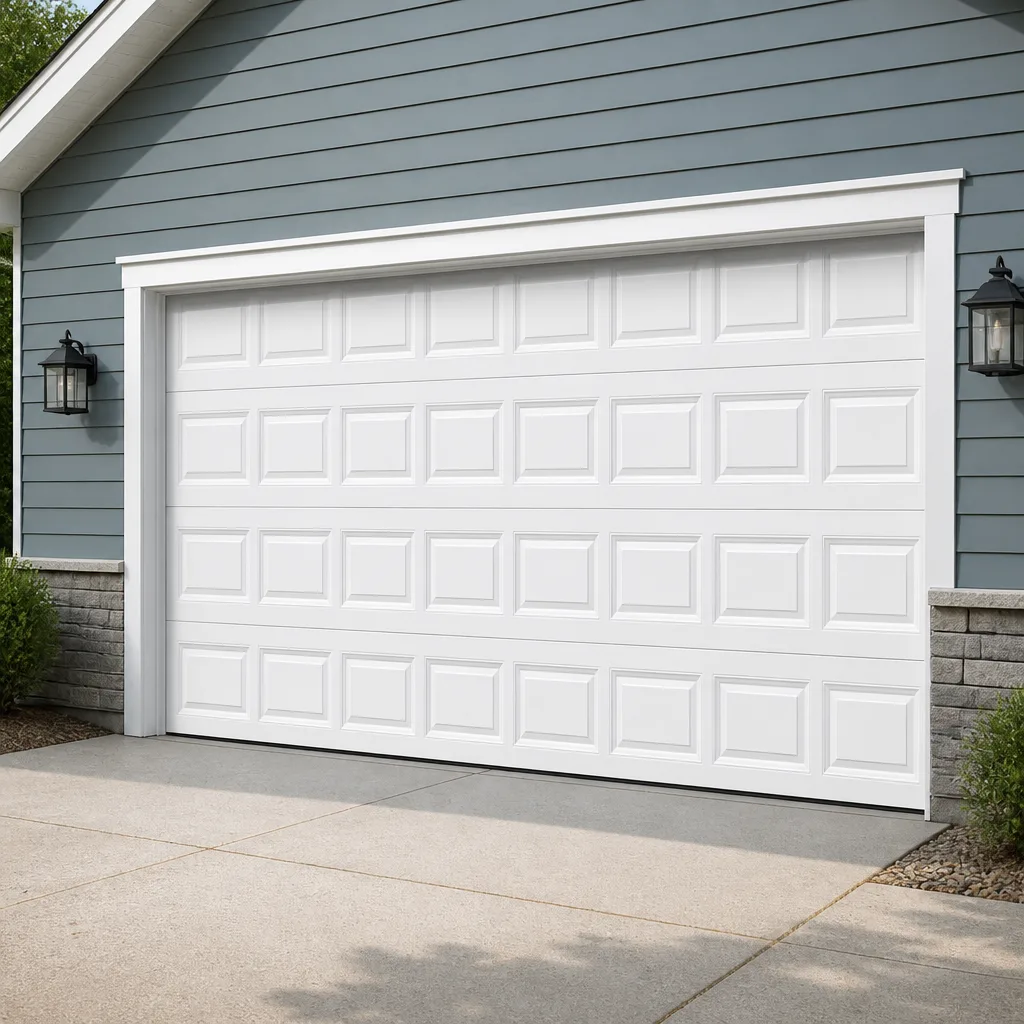 Raised-panel steel
 Carriage house
 Modern flush
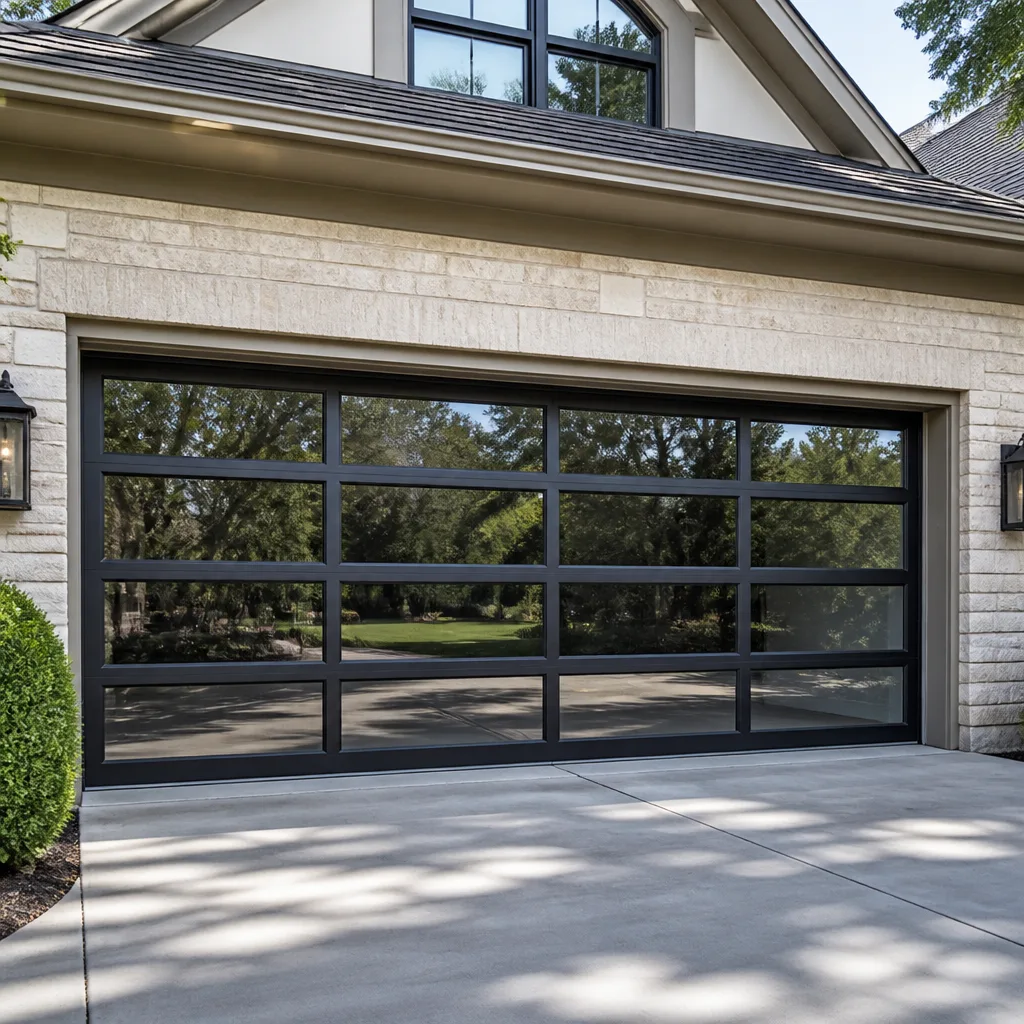 Full-view glass
 LiftMaster openers
 Chamberlain openers
Full 25-point door and opener safety check with every visit - springs, cables, rollers, tracks, and your LiftMaster or Chamberlain opener included
You get a price before we start. It does not change when the truck arrives.
Get your free estimateGarage Door Repair Maintenance Checklist for Compton Homeowners
Lubricating your springs in January because a national home-improvement site says to is the right task on the wrong schedule for Compton. Our dry heat and year-round use pattern means your door wears differently than one in Chicago or Seattle, and most generic checklists ignore that completely. This guide is built around what actually degrades first here in Compton: metal fatigue from daily temperature swings, oxidation on hardware, and the strain of high-use households where the door cycles ten or fifteen times a day. We’ll walk through a maintenance routine that matches the Southern California use cycle, not a calendar written for hard winters.
Quick Answer
A garage door maintenance checklist for Compton homeowners should prioritize twice-yearly inspection of springs, cables, and rollers for dry-heat metal fatigue, monthly lubrication of moving parts with a silicone-based product that won’t dry out in SoCal conditions, and cycle-based service intervals adjusted for multi-driver households. Homes closer to the Port of Los Angeles should add a quarterly check for salt-air oxidation on all exposed hardware.
Styles & brands we work with
- Raised-panel steel
- Carriage house
- Modern flush
- Full-view glass
- LiftMaster openers
- Chamberlain openers
Table of Contents
- Why Compton Weather Wears Doors Differently
- The Coastal Corrosion Gradient
- Lubrication Products That Work in Dry Heat
- Cycle-Based Maintenance for High-Use Households
- Monthly Maintenance Checklist
- Seasonal Deep Inspection
- What to Log After Each Maintenance Pass
- Common Mistakes to Avoid
Why Compton Weather Wears Doors Differently
Compton sits in a climate where the temperature can swing thirty degrees between early morning and late afternoon. That daily expansion and contraction is the quiet killer of garage door hardware. When metal heats up, it expands. When it cools, it contracts. Do that hundreds of times a year and the stress concentrates at connection points: spring anchor brackets, hinge bolts, cable ends. In humid climates, the moisture softens the effect somewhat. Here, the dry air means materials cycle through temperature stress without that buffer, which is why we see hairline fractures in springs and loosened hardware more often than rusted-out panels.
What does this mean for your inspection routine? You should be looking for different failure signatures than a homeowner in a humid state. Instead of checking for rust, check for:
- Fine cracks or discoloration on torsion spring coils
- Bolts that have worked loose from thermal cycling
- Rollers with worn bearings that chatter on dry days
- Cable ends that show fraying where they meet the bottom bracket
The good news: if you catch these early, most fixes are straightforward. One of the most common things we handle in garage door repair is a spring that gave out after months of slow fatigue that went unnoticed. The bad news: these problems compound quickly once metal fatigue reaches a critical point. A loose bolt becomes a misaligned track. A worn roller becomes a bent hinge. The earlier you look, the less you pay.
The Coastal Corrosion Gradient
Not every house in Compton faces the same environmental load. Homes in the western and southern parts of the city, closer to the Port of Los Angeles, get a measurable amount of airborne salt even though Compton itself is not on the coast. That salt settles on exposed metal and accelerates oxidation when combined with our dry heat. The result is a corrosion gradient: properties closer to the port see faster degradation of zinc-plated hardware, cable strands, and unsealed spring coils than properties further east.
If you live within a few miles of the port area, add a quarterly hardware check to your routine. Look specifically at:
- Spring coils for white or chalky oxidation
- Cable strands for dulling or darkening
- Hinge plates and track brackets for flaking plating
- Bottom brackets where road spray and moisture collect
We see this pattern regularly on homes in Compton’s western neighborhoods. The fix is not to buy expensive marine-grade hardware for a residential door, but to inspect more often and replace zinc-plated parts with stainless or powder-coated equivalents when they show signs of fatigue. It’s a small upgrade that extends service life in this specific environment, and it’s the kind of adjustment a generalist would never think to suggest.
Lubrication Products That Work in Dry Heat
Here’s where most national checklists get it wrong for Compton. WD-40, white lithium grease, and heavy motor oils all perform poorly in our conditions. WD-40 is a solvent, not a lubricant: it cleans briefly and then evaporates, leaving metal drier than before. White lithium grease attracts dust, and Compton has plenty of it. Within weeks it turns into an abrasive paste that grinds against roller bearings. Heavy oils gum up in heat and then cake when temperatures dip at night.
What actually works in dry heat:
- Silicone spray with PTFE: dries to a film that doesn’t attract dust, stays effective across our temperature range, and is safe for nylon components.
- Lithium grease for open-chain drives only: not for rollers or hinges. Chain drives on a garage door opener repair do fine with a thin lithium coating, but apply it sparingly.
- Teflon-based dry lubricant: good for tracks and hinge pivots, but not for spring coils.
The sequence matters. Before lubricating anything, wipe the part down with a clean rag to remove old product and dust. Then apply lubricant to the roller bearings, not the roller track. The track should stay dry: a lubricated track just collects debris and makes the rollers work harder. Focus on hinge points, spring coils, and the opener rail if it’s chain-driven. For screw-drive openers, a thin coat of white lithium on the screw is still the standard, but wipe off excess immediately: heat and dust will turn any remaining product into sludge.
Cycle-Based Maintenance for High-Use Households
Compton is a multi-car, multi-driver community. A door that cycles eight times a day in a one-car household might cycle twenty times a day when three drivers come and go at staggered hours. That is the difference between 2,900 cycles a year and 7,300 cycles a year. Most garage door springs are rated for roughly 10,000 cycles. Do the math: a high-use household in Compton can burn through a spring’s rated life in under eighteen months.
Cycle-based maintenance means you stop thinking in calendar months and start thinking in door operations. A simple rule:
- Low use (under 5 cycles daily): full inspection twice a year, lubrication every three months.
- Moderate use (5-10 cycles daily): full inspection quarterly, lubrication every six weeks.
- High use (over 10 cycles daily): full inspection every eight weeks, lubrication monthly.
You don’t need a cycle counter to estimate this. Count how many times the door opens and closes on an average weekday, including mornings when everyone leaves and evenings when everyone returns. Then adjust your schedule accordingly. A high-use household in Compton should also consider upgrading to a high-cycle spring when replacement time comes. It costs more up front but lasts proportionally longer, and for a door that cycles constantly, it usually works out cheaper per year. We’re factory-familiar with LiftMaster, Chamberlain, Genie, and Raynor systems, so we can supply the right spring rating for your actual usage pattern rather than a one-size-fits-all default.
Monthly Maintenance Checklist
This is a fifteen-minute pass you can do yourself. It catches the early signs that prevent expensive service calls. Do it at the same time each month so it becomes a habit, and log what you find using the method in the next section.
- Listen while the door operates: stand inside and listen through a full open-close cycle. A smooth door is nearly silent. Grinding, squealing, or clanking means something is dry, loose, or wearing.
- Check the balance: pull the release handle when the door is closed, then lift the door manually to chest height. It should stay put. If it drops or rises on its own, the springs are losing tension and need attention.
- Inspect cables for fraying: look at both lift cables along the bottom section where they attach. Any broken strand means the cable is nearing failure and should be replaced.
- Check all brackets and bolts: grab each hinge and track bracket and try to wiggle it. Nothing should move. Tighten anything that’s loose, but do not over-tighten lag bolts into the door frame.
- Wipe down the tracks: use a dry rag to clear dust and debris from the vertical and horizontal tracks. Never bend a track to clean it, and never lubricate it.
- Test the safety reverse: place a 2×4 flat on the floor under the door’s path and close it. The door should reverse within two seconds of contact. If it doesn’t, the opener’s force setting needs correction.
- Look at the weatherstrip: the rubber seal along the bottom of the door cracks and hardens in Compton’s dry heat. Replace it before the rainy season when standing water becomes an issue.
Seasonal Deep Inspection
Twice a year, give the door a longer examination. September and March work well for Compton: September catches wear from the hottest months, and March catches anything the winter (such as it is) brought in. This is the inspection where you look for the slow-developing problems that monthly checks miss.
- Examine the springs closely: with the door closed, stand on a step ladder and run a flashlight along each spring coil. Look for separation between coils, which indicates a crack forming. Also check the spring’s color: a spring that has turned from shiny to dull gray or shows surface rust is aging faster than it should.
- Check the door sections alignment: run your hand along the seams between panels (carefully, with the door closed). Gaps or uneven seams suggest the door is being pulled off-square, usually by weakened springs or one failed roller.
- Test all rollers: with the door closed, use a flashlight and look at each roller from below. Worn rollers show flat spots, visible bearing play, or wobble in the stem. These are prime candidates for replacement before they grind into the track.
- Inspect the opener’s drive system: for chain drives, check tension and look for stretched links. For belt drives, look for cracking or fiber wear. For screw drives, wipe the screw and check for metal shavings.
- Check the header and mounting points: look at where the horizontal track mounts to the ceiling and the header above the door opening. Any separation, wood splitting, or bracket bending indicates excess force being transmitted upward, often from a spring that’s getting tired.
- Cycle the door five full times: stand and watch. Note any hesitation, uneven speed, or noise that appears only on certain parts of the cycle. These are the clues your technician will want.
If any of these checks reveals a concern, don’t wait for the next scheduled pass. A spring showing separation, a cable with broken strands, or a roller with visible bearing play can fail without warning. That’s the moment to call for Garage Door Service Compton and get a trained eye on it before a minor wear item becomes a major repair.
What to Log After Each Maintenance Pass
Most homeowners never think to log maintenance, and that’s exactly why small issues become big ones. A log gives you two things: a baseline for what “normal” looks like on your specific door, and a trend line that shows when a component is degrading faster than it should. Without a log, you’re relying on memory, and memory is not a diagnostic tool.
Keep a simple notebook in the garage or a note on your phone. After each pass, record:
- Date: the actual date, not “this month.”
- Door balance test result: stayed, dropped slightly, rose slightly, or noticeable movement.
- Noise level: smooth, slight squeak, grinding, or a new sound you can’t identify.
- Roller condition: all good, or specific rollers showing wear (label them by position: left top, right bottom, etc.).
- Cable appearance: clean, minor rust, fraying strand count if visible.
- Spring appearance: coil spacing even, any separation, any color change.
- Any work done: lubrication, tightened bolts, replaced weatherstrip.
When you call a technician, this log saves a diagnostic hour. Instead of starting from zero, they can see that the door has been progressively getting louder over three months or that the balance has shifted twice since spring. We see developing failure trends faster when a homeowner has records, and that usually means catching a spring before it breaks rather than after. It also means you’re not paying a technician to recheck things you already know are fine.
Common Mistakes to Avoid
- Lubricating with WD-40: it’s a cleaner, not a lubricant. It strips away whatever protection existed and leaves the metal more vulnerable than before, especially in dry heat. Use a silicone or PTFE spray instead.
- Greasing the track: the track was never designed to be lubricated. It just collects Compton dust and turns into grinding paste. Keep tracks dry and clean.
- Ignoring a slightly off-balance door: a door that drifts down when released is telling you the springs are losing tension. That condition overloads the opener, wears the gears prematurely, and leads to a spring failure that usually happens at the worst possible moment.
- Using the wrong spring rating: when a spring finally fails, replacing it with whatever is cheapest usually means a spring rated for fewer cycles than your household’s usage. A one-size-fits-all spring on a high-use Compton door means you’ll be replacing it again much sooner than you should.
- Skipping the safety reverse test: the auto-reverse system is a safety device, not a convenience. Test it monthly. If it’s not working, the opener’s force setting is wrong and needs professional attention before someone gets hurt.
- Forgetting the coastal hardware check: if you’re in west Compton, closer to the port, the corrosion clock runs faster. Skipping the quarterly hardware inspection means discovering cable degradation only when a cable snaps.
- Doing spring work yourself: torsion springs hold enormous tension. If one lets go while you’re working on it, the result can be catastrophic. This is not a DIY repair under any circumstances. Call a professional who works on these systems daily.
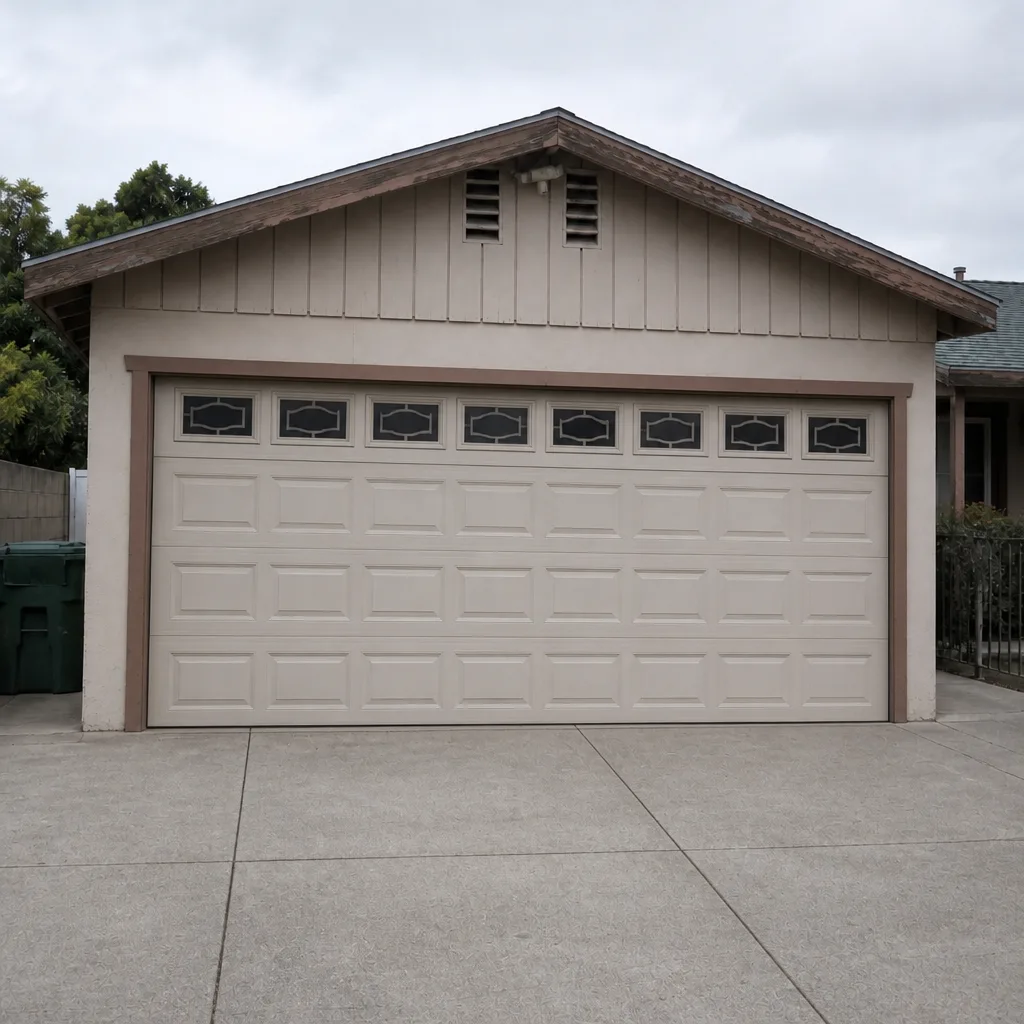
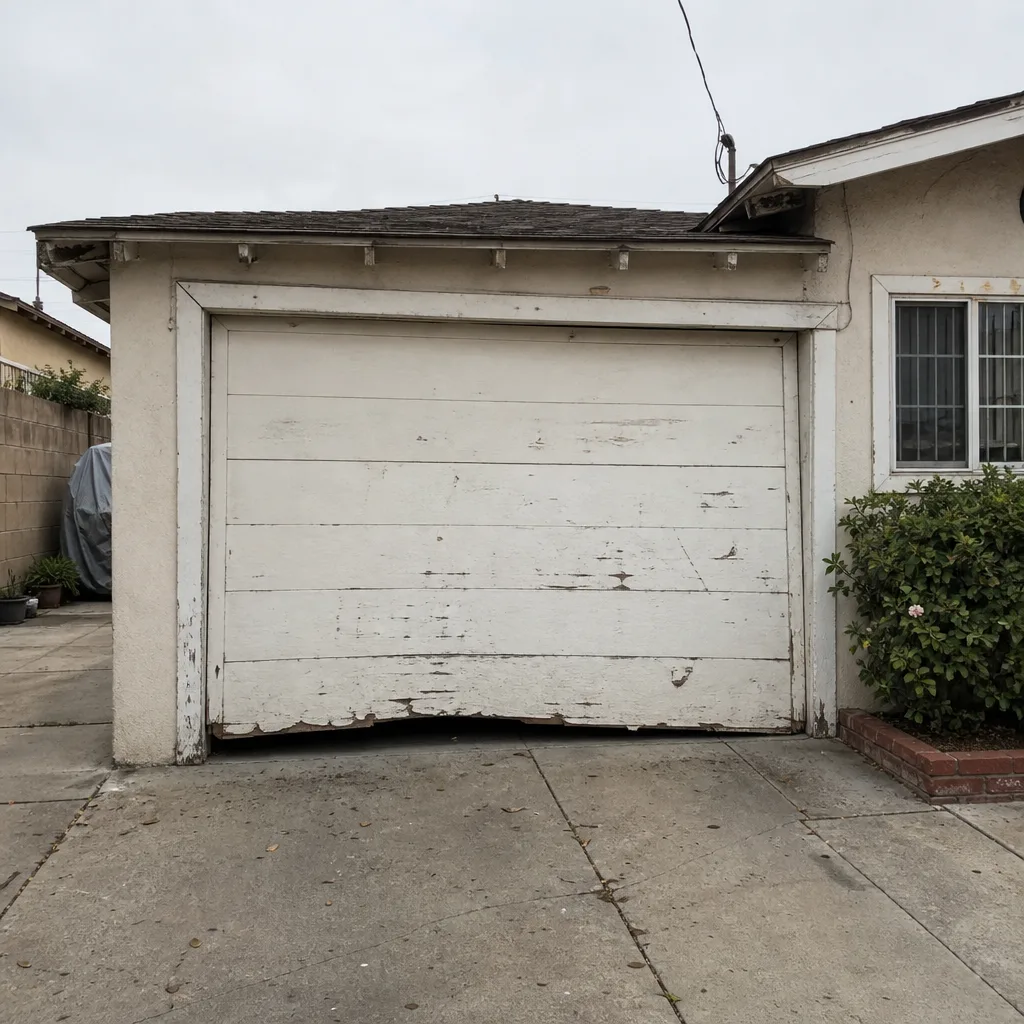
See the difference
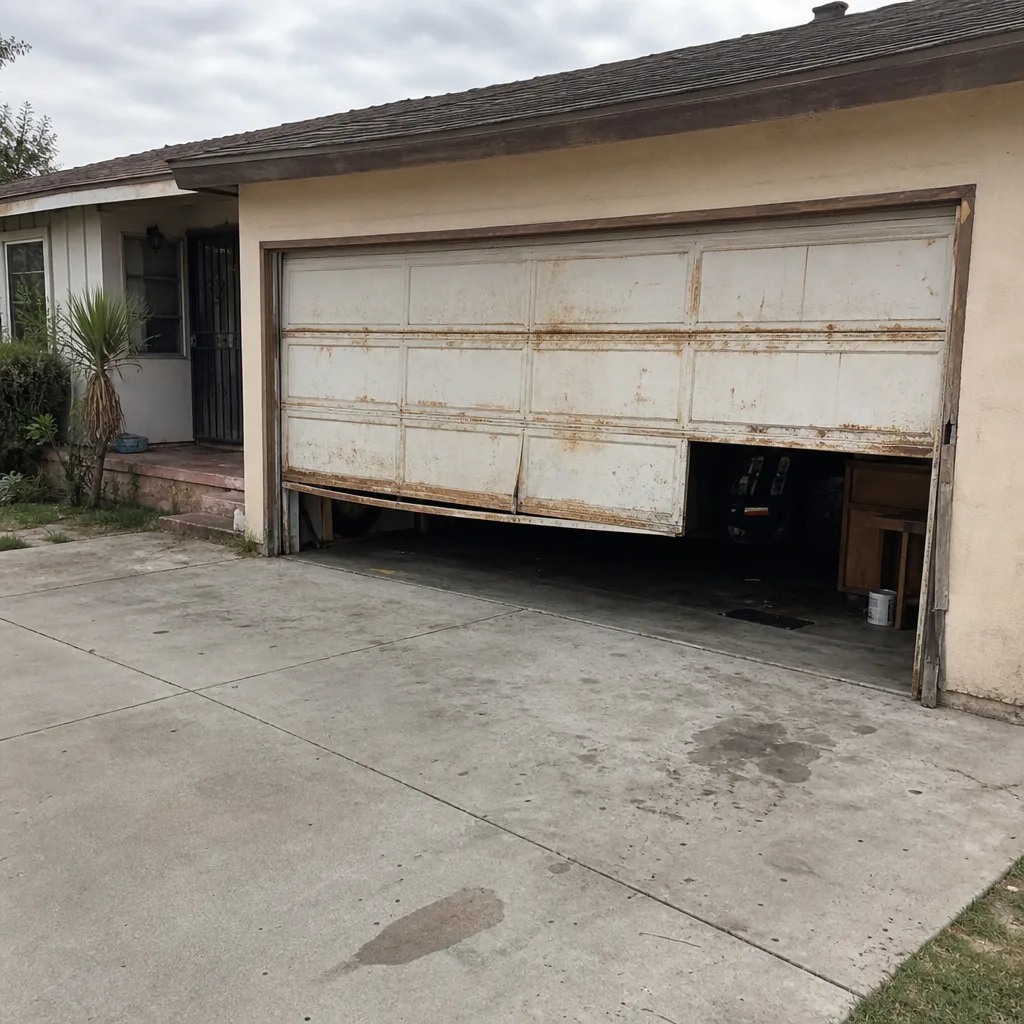 Before
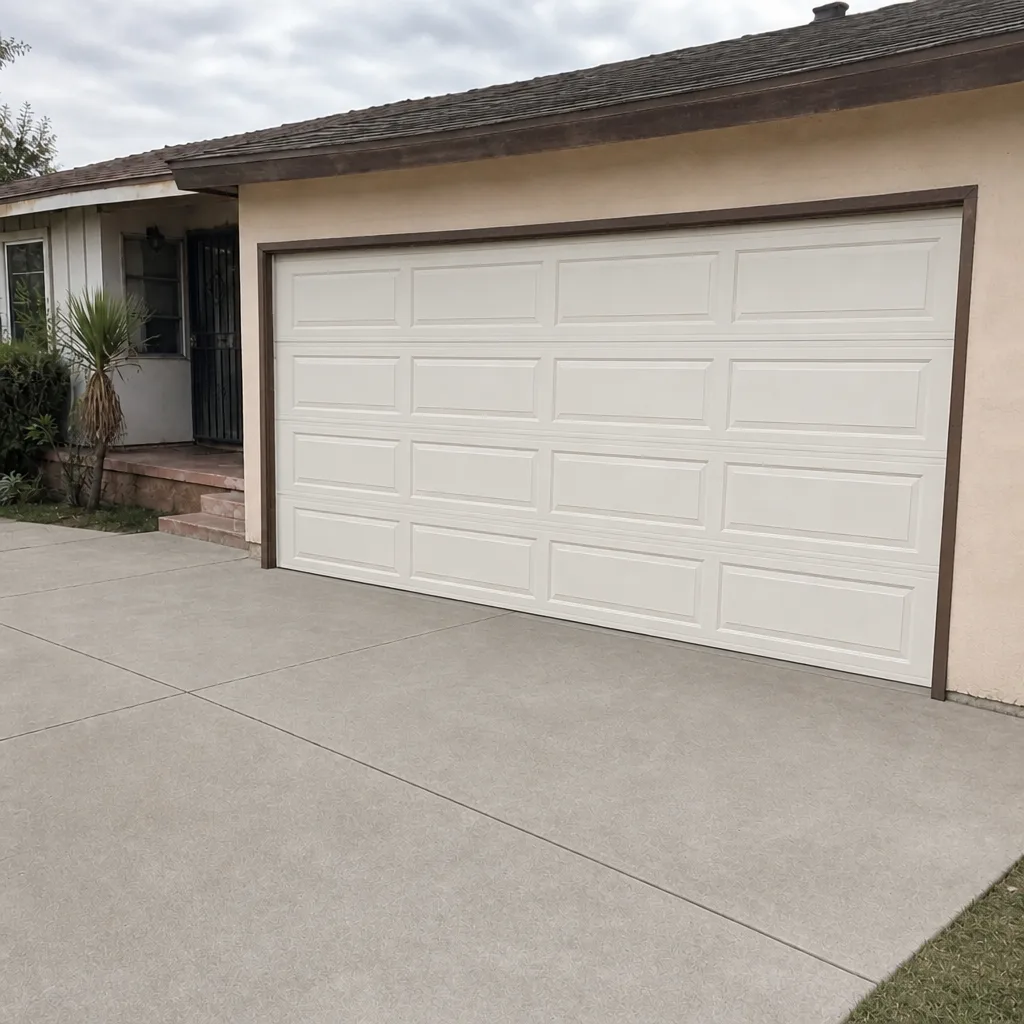 After
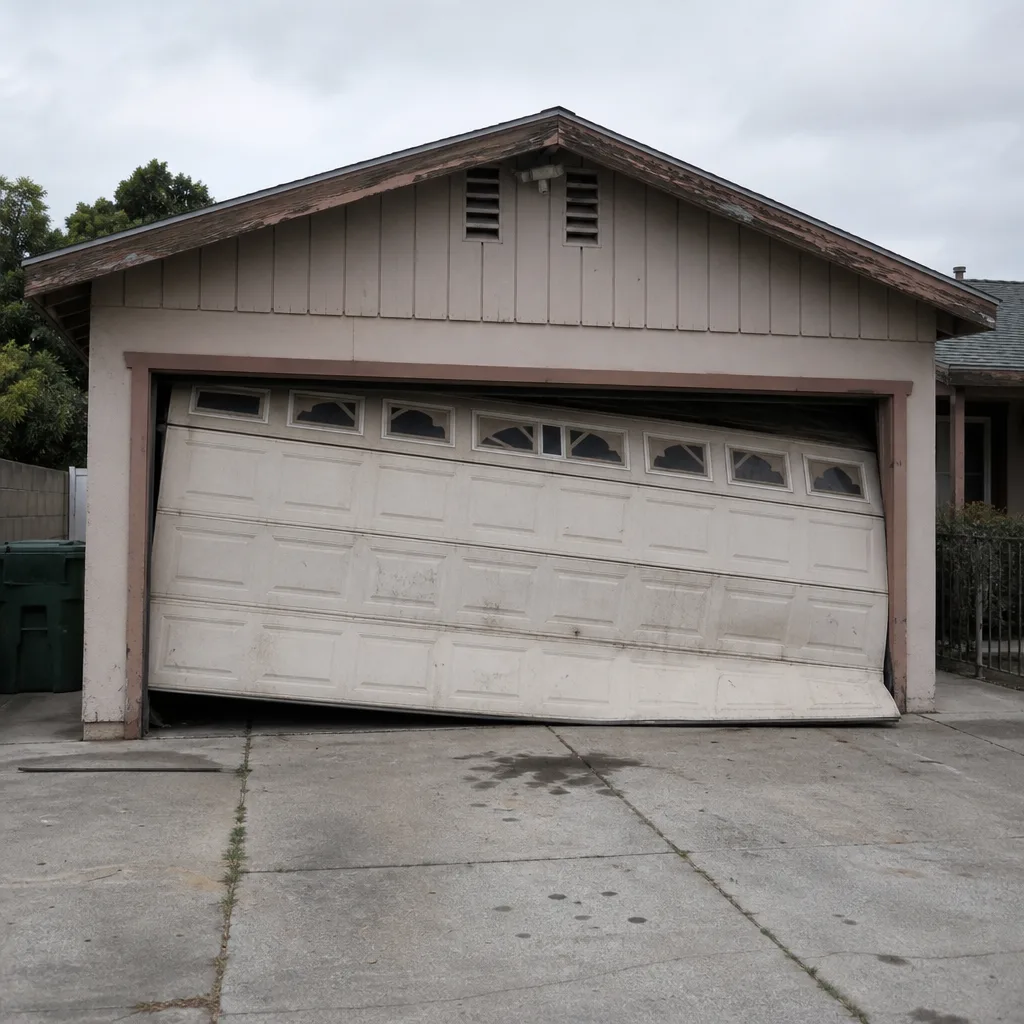 Before
 After
 Before
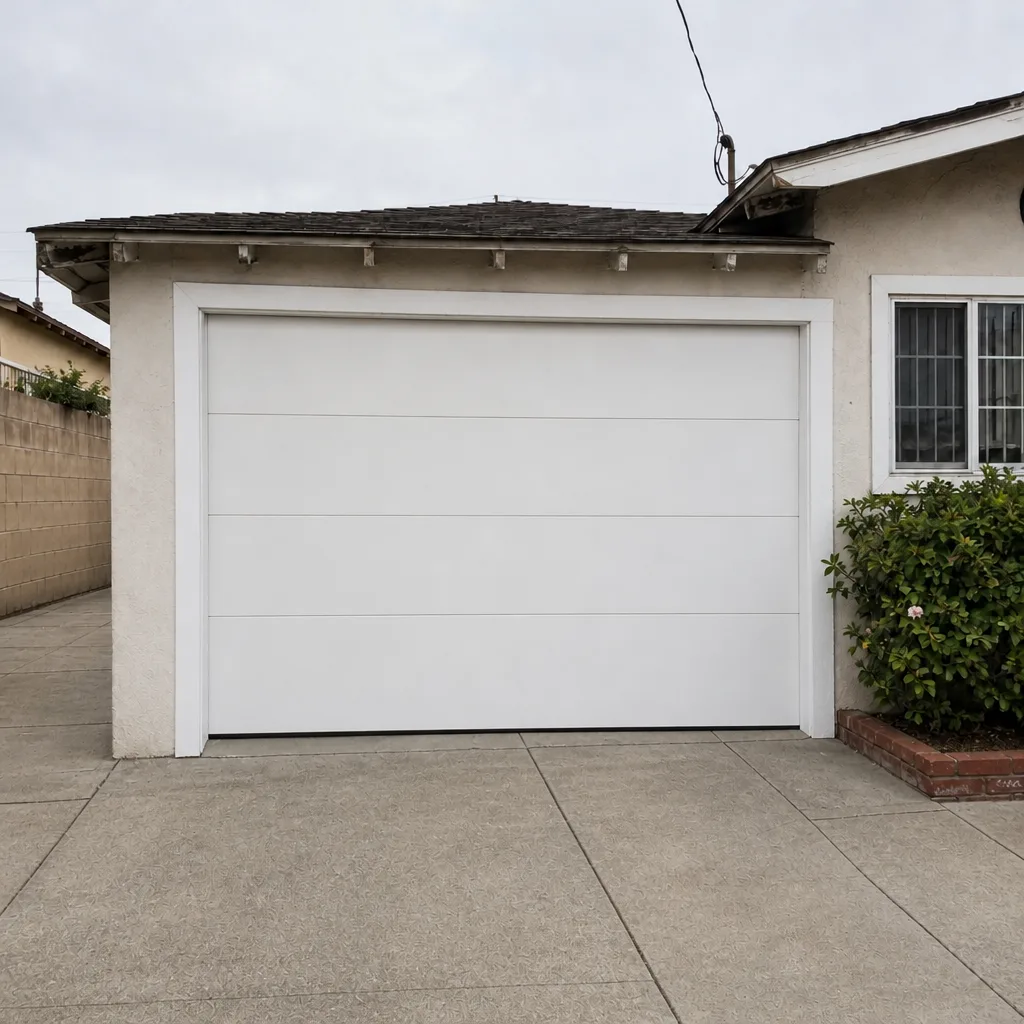 After
When to Call a Professional
Some maintenance tasks are safely DIY. Others are not. Any work involving torsion springs, lift cables under tension, or opener force adjustments should go to a trained professional. Springs store enough energy to cause serious injury if mishandled. Cable ends that snap under load turn into fast-moving projectiles. And opener safety systems require calibrated adjustments that a visual inspection can’t confirm.
If you notice any of these conditions during your maintenance pass, stop and call: a spring that shows visible separation or separation between coils, a cable with broken strands, a door that reverses direction unpredictably, or a track that’s come loose from its mounting. Also call if your door has started making a sound you can’t identify: unusual noise is always the first sign of a developing problem, and early diagnosis is cheaper than late repair. Garage Door Service Compton offers free estimates in Compton – call (833) 593-3930. We answer 24/7. Fast dispatch from 7am to 7pm, Sunday through Friday.
Frequently Asked Questions
Lubricate moving parts every six weeks if your household cycles the door more than ten times a day, and every three months for lighter use. Use a silicone spray with PTFE, not WD-40 or white lithium grease, which dry out or attract dust in Compton’s dry heat.
The daily temperature swings in Compton expand and contract metal hardware, which loosens bolts and tightens clearances. What sounds like seasonal noise is usually thermal cycling working on a component that was already slightly worn. A seasonal inspection in September catches most of these before they become failures.
Most springs are rated for around 10,000 cycles. A busy multi-driver household in Compton might cycle the door 7,000 times a year, meaning a standard spring could need replacement in under eighteen months. High-cycle springs are worth considering for high-use doors.
Yes. Homes in the western parts of Compton receive airborne salt from the port, which accelerates oxidation on exposed hardware. A quarterly inspection of springs, cables, and hinges is a good practice for those properties, especially compared to the twice-yearly schedule for homes further east.
A door that drops when released manually means the springs have lost tension and are nearing failure. This condition also strains the opener’s motor and gears. Schedule a Compton garage door specialist to assess the springs before they fail completely.
No. Torsion springs are under high tension and can cause serious injury if not handled with the correct tools and training. Leave spring replacement to a professional who works on springs every day. Call (833) 593-3930 for an estimate.
The Bottom Line
Compton’s climate and use patterns call for a maintenance schedule that ignores the national checklists. Dry heat accelerates metal fatigue, the coastal gradient adds corrosion for west-side homes, and multi-driver households push cycle counts far past what generic advice assumes. The routine is simple: lubricate with the right product on a schedule matched to your actual usage, inspect twice a year with the seasonal deep pass, and log everything so problems reveal themselves before they break. Most garage door failures in Compton are gradual, not sudden, and the homeowner who pays attention catches them early. Call (833) 593-3930 for a free estimate. We answer 24/7. Fast dispatch from 7am to 7pm, Sunday through Friday.
Written by the team at Garage Door Service Compton, serving Compton since 2012.