
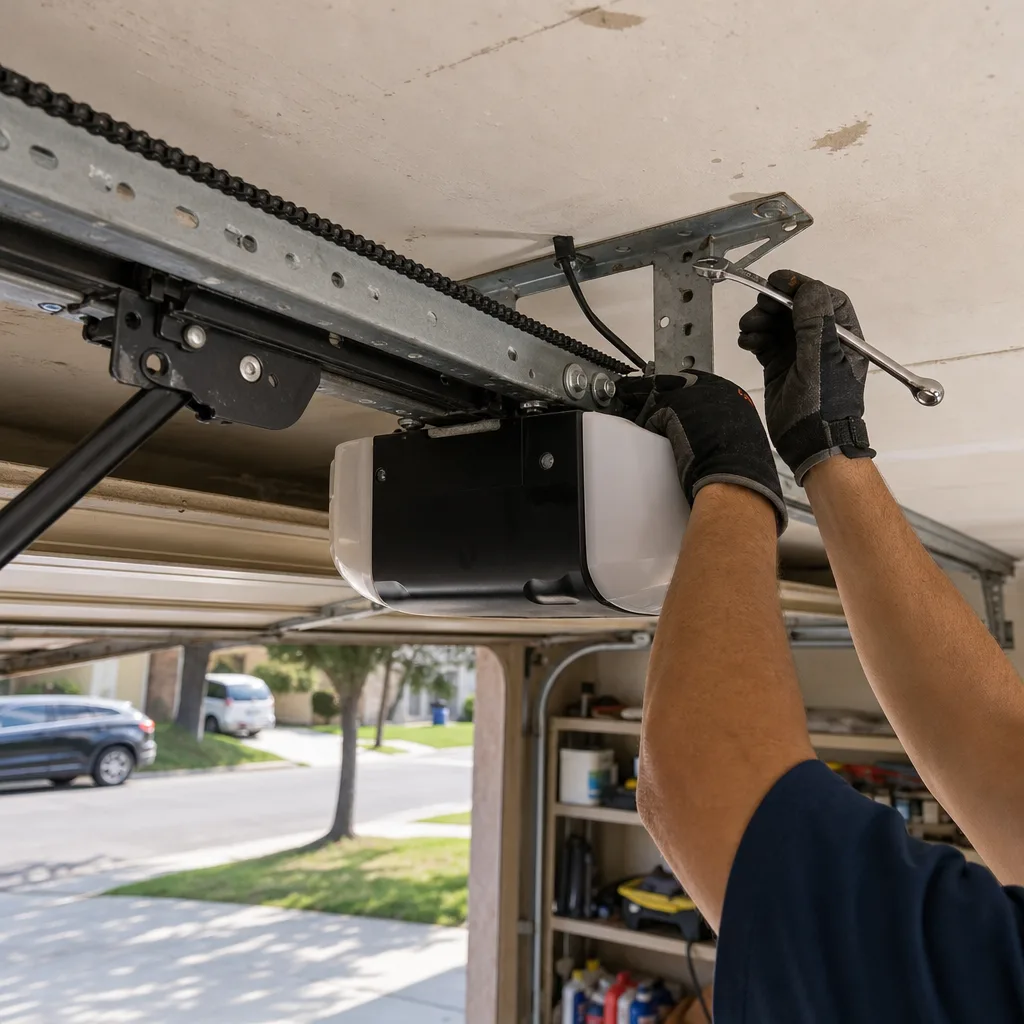
Last updated November 4, 2026
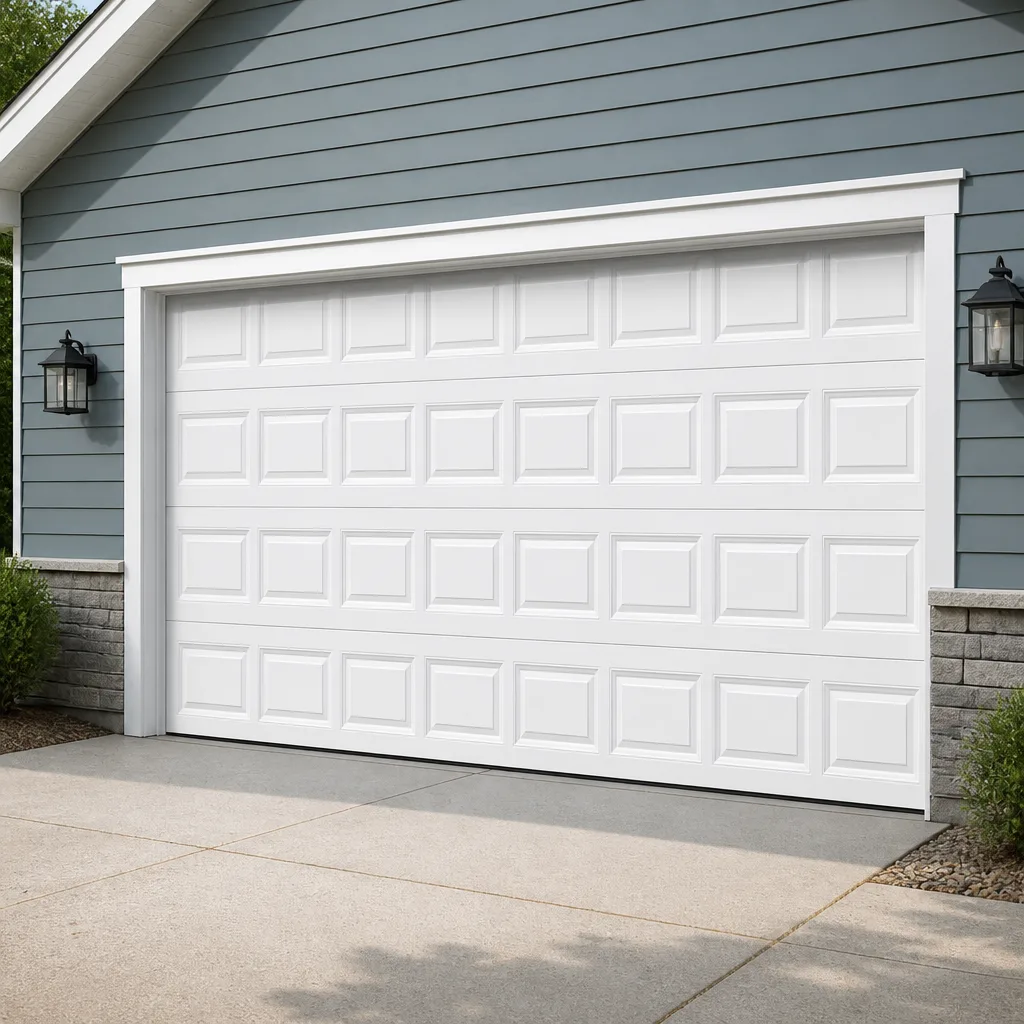 Raised-panel steel
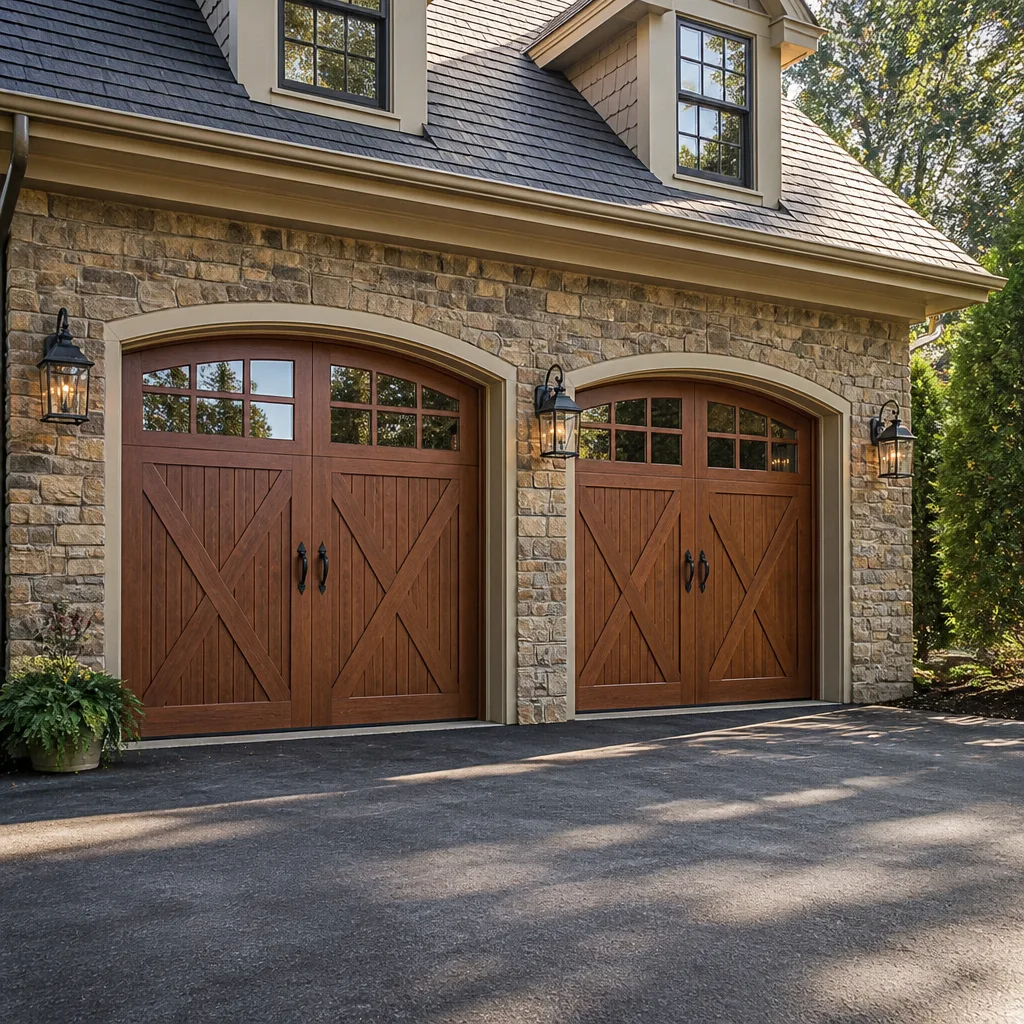 Carriage house
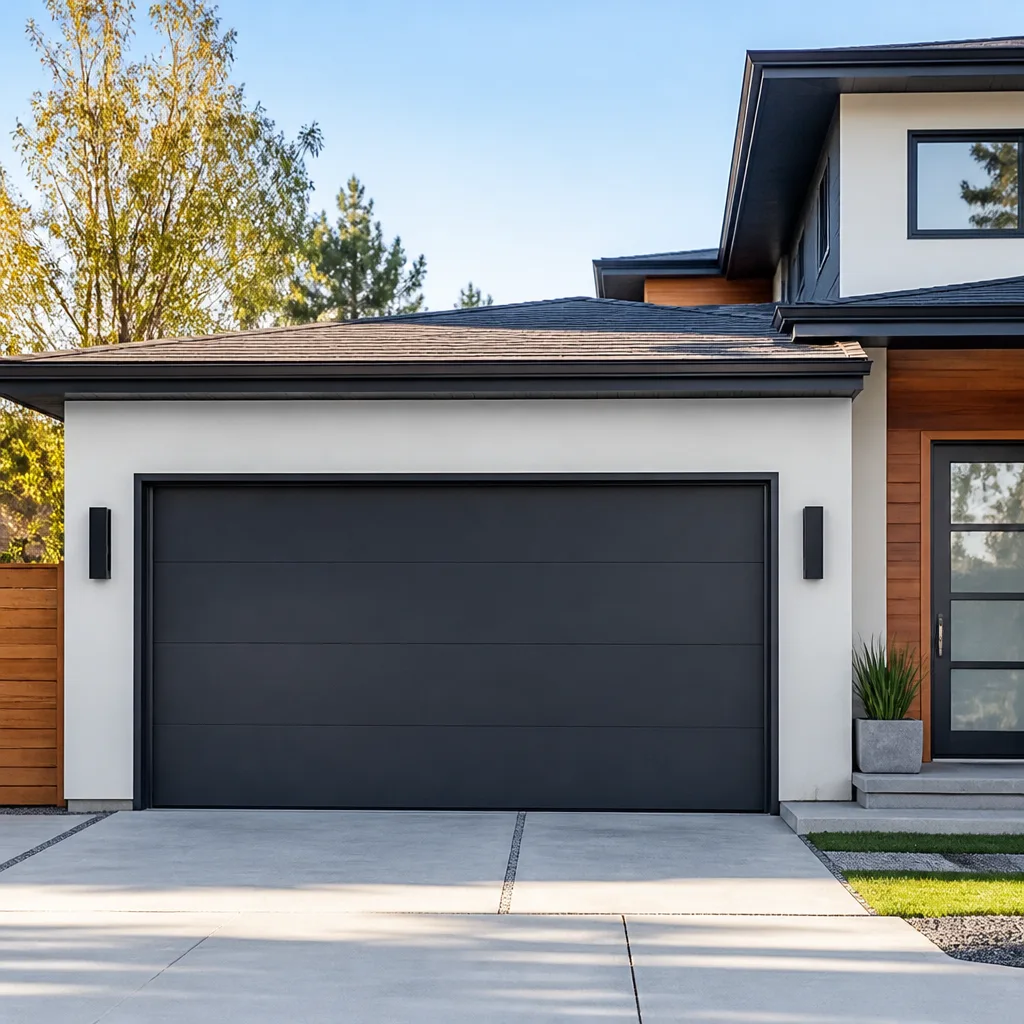 Modern flush
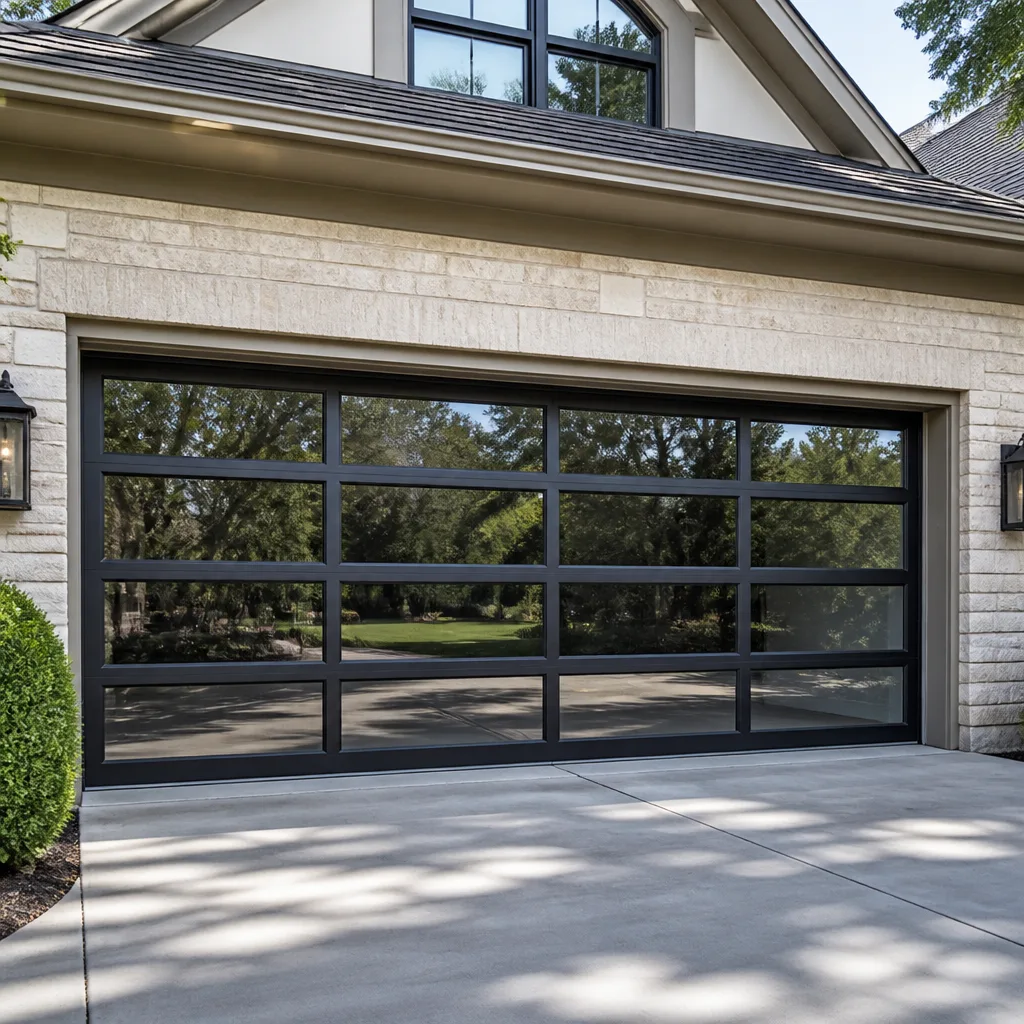 Full-view glass
 LiftMaster openers
 Chamberlain openers
Full 25-point door and opener safety check with every visit - springs, cables, rollers, tracks, and your LiftMaster or Chamberlain opener included
You get a price before we start. It does not change when the truck arrives.
Get your free estimateHow to Hire a Garage Door Contractor in Compton: A Step-by-Step Guide
Most homeowners in Compton don’t realize that the person they hire to replace a garage door spring is supposed to hold a specific state license. It’s not a general contractor’s license or a handyman registration. It’s a C-61/D28 specialty classification for garage door work. The unlicensed operators who advertise on street corners and through word of mouth count on that confusion. They know you won’t ask, and they know the price sounds better than the licensed shop down the road. This guide walks through exactly what to check, what a real estimate should look like, and which questions separate a specialist from someone who is about to learn on your door.
Quick Answer
To hire a garage door contractor in Compton, verify their C-61/D28 license on the CSLB website, get a written estimate that lists parts by model number and separates labor from materials, and ask questions about spring sizing and your opener brand. Then confirm warranty terms in writing before any work starts. A licensed specialist costs more than a cash-only operator up front and far less when the job is done once.
Styles & brands we work with
- Raised-panel steel
- Carriage house
- Modern flush
- Full-view glass
- LiftMaster openers
- Chamberlain openers
Table of Contents
- Check the C-61/D28 License First
- Red Flags Specific to Compton’s Informal Market
- What a Legitimate Written Estimate Must Include
- Questions That Separate a Specialist From a Guesser
- How to Structure Payment Without Getting Burned
- Warranty and Follow-Up: What to Ask Before You Sign
- Common Mistakes to Avoid
- When to Call a Professional
Check the C-61/D28 License First
California law treats garage door work differently than most people expect. Replacing a spring, installing an opener, or hanging a new door is contracted work that requires a C-61/D28 specialty license from the Contractors State License Board. Not a general B license. Not an electrical license. The D28 classification exists specifically for garage doors, gates, and related hardware. A contractor who tells you a general license is enough either doesn’t understand the law or hopes you don’t.
Here is the step-by-step process we recommend to anyone in Compton before they sign anything:
- Go to the CSLB website. The license lookup tool is free and public. You need the contractor’s license number, their business name, or their personal name.
- Pull up the license record. Look at the classification. It must say C-61/D28, not B, C-10, or anything else. A handyman license, if one is even shown, does not cover garage door work.
- Check the status. “Active” means the license is current. “Clear” means the bond and insurance are on file. A license can show active while the bond has lapsed, which means the contractor is not legally allowed to work. You want both words: active and clear.
- Look at the issue date. A license issued last month is not automatically a red flag, but it tells you this person is new to carrying the paper. Pair that with the questions in the next section before you decide.
- Check for workers’ comp. If the contractor has employees, they must carry workers’ compensation insurance. If they don’t, any injury on your property becomes your liability. A solo operator is exempt, but a team of two or three is not.
We work on garage doors every day in Compton. We have seen the aftermath of unlicensed work more times than we can count. The pattern is always the same: a low cash quote, a spring that is the wrong size, and a homeowner who calls us a few weeks later because the door slams shut or the opener burned out trying to lift a door that is out of balance. The license check costs you five minutes. Skipping it can cost you the whole system.
Red Flags Specific to Compton’s Informal Market
South LA has a large cash economy for home repairs. Roofing, concrete, fencing, and garage doors. Some of these operators are skilled. Most are not. The ones who are not have learned how to close a sale on the driveway before you have time to think. Here are the patterns we hear about most often from Compton homeowners:
- Cash-only pricing. A licensed contractor can take cash, but they will also take a check or card. An operator who refuses anything but cash is invisible. No paper trail means no recourse when the spring snaps again.
- No written scope of work. A quote scribbled on a business card or delivered verbally is not a contract. If the scope of work isn’t written down, the contractor can change it after the door is apart.
- The price drops when you hesitate. This is the classic move. You get a quote, you pause, and suddenly the price falls by a third. Real pricing does not change because you blinked. It changes because the job changed, and that should be in writing.
- No model numbers on the estimate. A real technician knows what spring your door needs. They can tell you the wire size, the inside diameter, and the length. Someone who writes “spring replacement” with no details is guessing, or planning to install whatever they have in the truck.
- A truck with no branding. Unmarked vehicles are common in the informal market. A licensed shop has no reason to hide its name. The truck or van should match the name on the estimate and the license.
None of this is meant to insult the person who knows how to hang a door but never bothered with the license. The problem is that you cannot tell the difference between that person and the one who learned last week from a video. The license, the written estimate, and the questions below are how you sort one from the other.
What a Legitimate Written Estimate Must Include
A real estimate for garage door work in Compton is a document, not a sentence. It protects you and it protects the contractor. Anyone who resists putting details in writing is telling you something important about how they handle problems.
Here is what a legitimate estimate should list:
- Parts by model number. If the job is a spring replacement, the estimate should say what spring: wire size, inside diameter, length, and whether it’s a standard or high-cycle spring. If it’s an opener, the estimate should name the model. A LiftMaster 8160 is a different machine than a LiftMaster 87504. The model number matters.
- Labor broken out separately. Materials and labor should each have their own line. This tells you what the parts cost and what the hours cost. It also makes a change order easy to understand.
- Warranty terms in writing. Which parts carry a warranty, for how long, and what it covers. “I guarantee my work” means nothing. “Springs warrantied for 10,000 cycles, labor for 1 year, in writing” means something.
- Total price, including tax. The number you agree to should be the number at the bottom of the page. No “plus tax” surprises later.
- Scope of cleanup and disposal. Will the old door or opener be hauled away? Is that included or a separate line? Compton alleys and curbs are not a dumpster. A contractor who leaves the old door in your driveway has not finished the job.
We write estimates this way because it removes ambiguity. When our team replaces a spring on a Raynor or Clopay door, the homeowner knows exactly what is going on the door and what it costs before we touch a bolt. That is the standard you should hold anyone else to.
Questions That Separate a Specialist From a Guesser
You do not need to become a garage door technician to hire one. But you should ask three or four questions that reveal whether the person on your porch actually works on doors or just sells them.
Question 1: “What size spring does my door need, and how did you determine that?”
This is the fastest test. A real technician looks at the door weight, the drum size, the cable length, and the door height, then calculates the correct spring. They do not guess. They do not put on “whatever the last door had.” If the answer is a shrug or a promise to figure it out, find someone else.
Question 2: “How much headroom and side room does my door need for this opener?”
Different openers need different clearances. A belt-drive Chamberlain might fit where a screw-drive unit will not. A specialist measures before recommending. A guesser tells you “they all fit.”
Question 3: “Is this opener compatible with my current door and brackets?”
Not every opener works with every door. A heavy wood door needs more lifting force than a light steel door. A LiftMaster smart opener has different mounting requirements than a basic Genie. The contractor should ask about your door’s weight and material before they quote an opener.
Question 4: “Who handles warranty parts if something fails in six months?”
The answer tells you if they stand behind the work or vanish after the check clears. A licensed shop will say “call us, we come back.” An unlicensed operator will say “call the manufacturer.” The manufacturer did not install it. The contractor did.
In our experience, these four questions take less than five minutes and eliminate most of the bad options before you spend a dollar.
How to Structure Payment Without Getting Burned
Payment structure is where Compton homeowners lose money. Not on the quote, but on the handshake. Here is how to protect yourself:
- Never pay in full upfront. A deposit is normal. Full payment before work is not. If a contractor demands the entire amount before they arrive, walk away.
- A reasonable deposit is 10% to 30% for large jobs. For a full door replacement, a deposit covers ordering the door. For a spring repair, a deposit is often unnecessary because the parts are on the truck. Anyone asking for half down on a spring job is financing their gas, not your parts.
- Pay the balance when the work is complete and the door cycles correctly. Open it. Close it. Watch it for balance. Listen for grinding. Then pay.
- Ask about a lien waiver. In California, a contractor or their material supplier can place a mechanic’s lien on your property if they are not paid. A lien waiver is a document that says the contractor and their suppliers have been paid and waive the right to lien. For any job over a few hundred dollars, a conditional and then unconditional lien waiver is a reasonable request.
- Keep records. The written estimate, the final invoice, the warranty terms, and proof of payment. If something goes wrong, this file is your leverage.
A driveway operator who wants cash, no receipt, and no written terms is not giving you a deal. They are giving you an unenforceable agreement. garage door repair in Compton is frequent enough that we see the same doors come back after bad work. The paper trail is what makes a repair stick.
Warranty and Follow-Up: What to Ask Before You Sign
Warranties separate the licensed shops from the fly-by-night operators as much as the license itself. A warranty does not have to be a novel, but it does have to be specific. Here is what to pin down:
- Parts warranty. How long is the spring, opener, or door panel covered? Who handles the claim: the contractor or the manufacturer? If a spring fails at month two, does the contractor come back or do you chase a factory in another state?
- Labor warranty. If a part fails and the part is free, is the labor to install the replacement also free? Many low quotes hide the fact that the part is warrantied but the labor is not.
- Cycle rating on springs. A standard spring is rated for about 10,000 cycles. A high-cycle spring is rated for 25,000 or more. In a household where the door goes up and down four times a day, the high-cycle spring lasts roughly twice as long. The estimate should say which one you are buying.
- What voids the warranty. If you lubricate the door with the wrong product or let a neighbor “adjust” the spring, does the warranty disappear? A good contractor will tell you. A bad one will use it as an excuse later.
- Hiring on price alone. The lowest quote is often from the person who will not be reachable in three weeks. Garage door repair in Compton has a market rate. A quote far below it is a warning, not a bargain.
- Skipping the license check. The CSLB lookup takes minutes. A contractor who cannot produce a license number is telling you they are not licensed. Believe them.
- Accepting a verbal quote. Verbal quotes are not enforceable in a dispute. Get it in writing, even for a spring replacement. Cheap jobs still go wrong.
- Ignoring the garage door brand. Not every contractor knows every brand. Ask if they are familiar with your specific door, whether it is a Craftsman production model or an Amarr architectural line. Specialization matters.
- Paying in cash with no receipt. Cash without documentation erases the transaction. If the contractor will not write a receipt, the job never officially happened.
- Letting a neighbor “help” after the job. Garage door springs and cables are under extreme tension. A well-meaning neighbor with a wrench can undo a professional repair and create a dangerous situation. Leave adjustments to a licensed specialist.
- Forgetting to test the safety reversal. After any opener work, place a piece of wood under the door and close it. The door should reverse on contact. If it does not, the sensors or the force settings are wrong. Do not accept the job as finished.
We carry parts for the major brands and stand behind our installations. When we install a Chamberlain or LiftMaster opener in Compton, the homeowner knows exactly what is covered and for how long before we start. That conversation is part of the job, not an afterthought.
Common Mistakes to Avoid
When to Call a Professional
Some jobs are obvious: a snapped spring, a door off its track, an opener that hums but will not move. Other signs are quieter. A door that shakes on the way up. A grinding noise that was not there last month. A cable that is starting to fray. These are not cosmetic issues. They are warnings that the system is under stress, and the failure is usually sudden and loud. If you are not sure what you are hearing, call someone who works on doors every day. Garage Door Service Compton offers free estimates in Compton. We look at the door, tell you what is wrong, and give you a written price before any work starts. Call (833) 593-3930.
See the difference
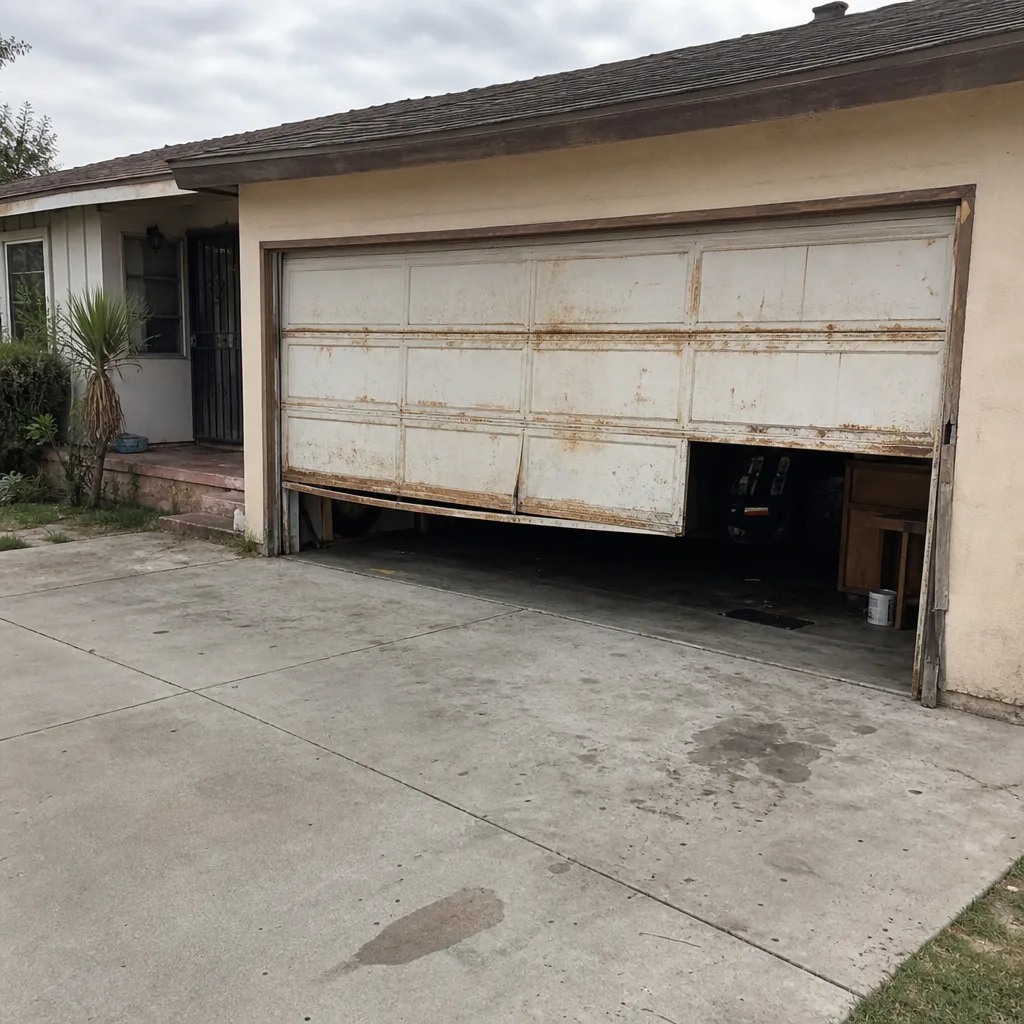 Before
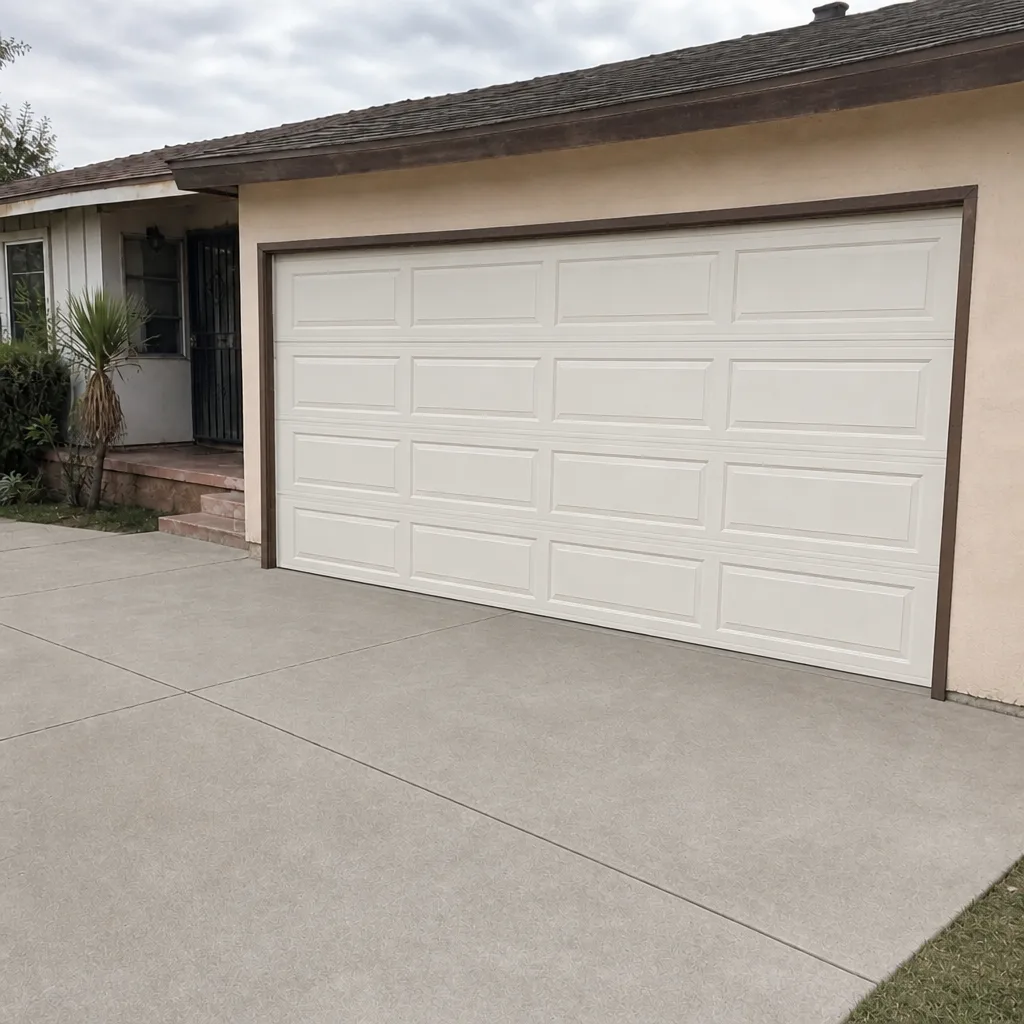 After
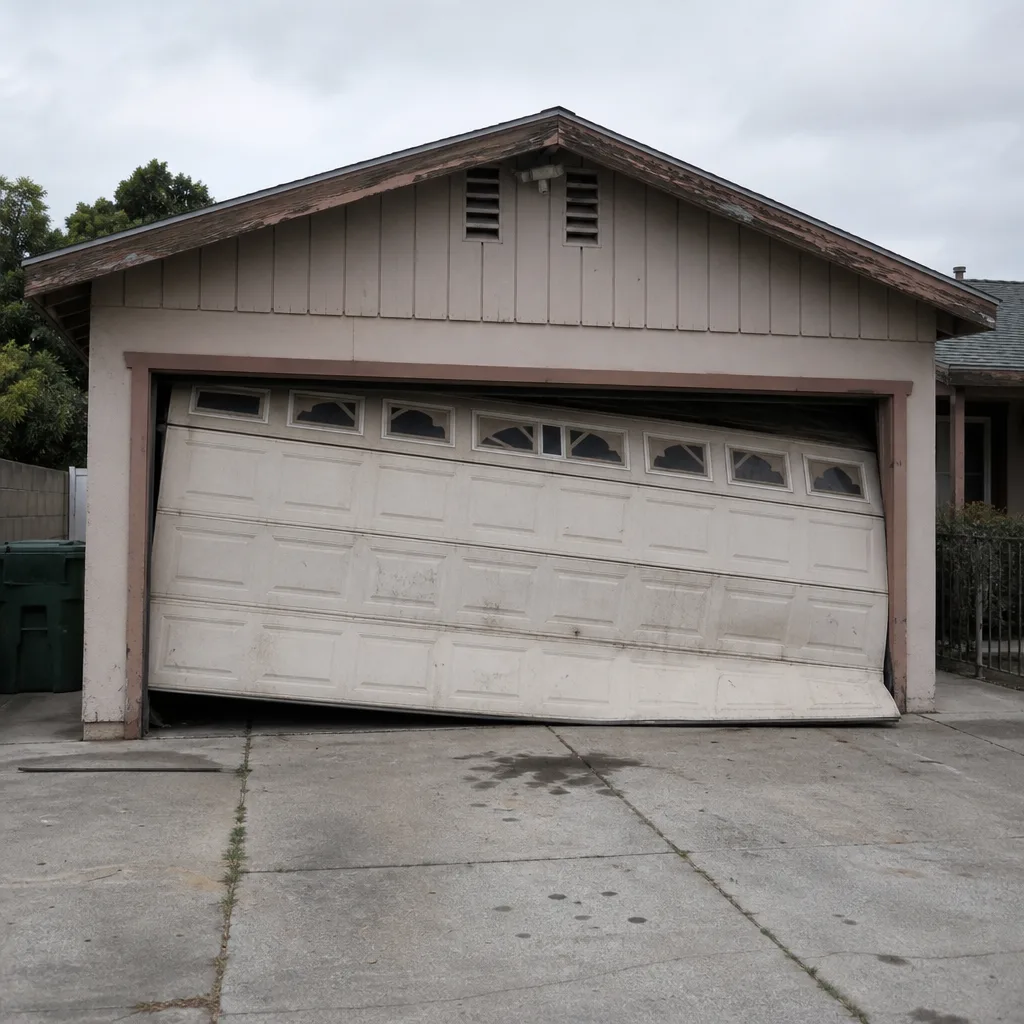 Before
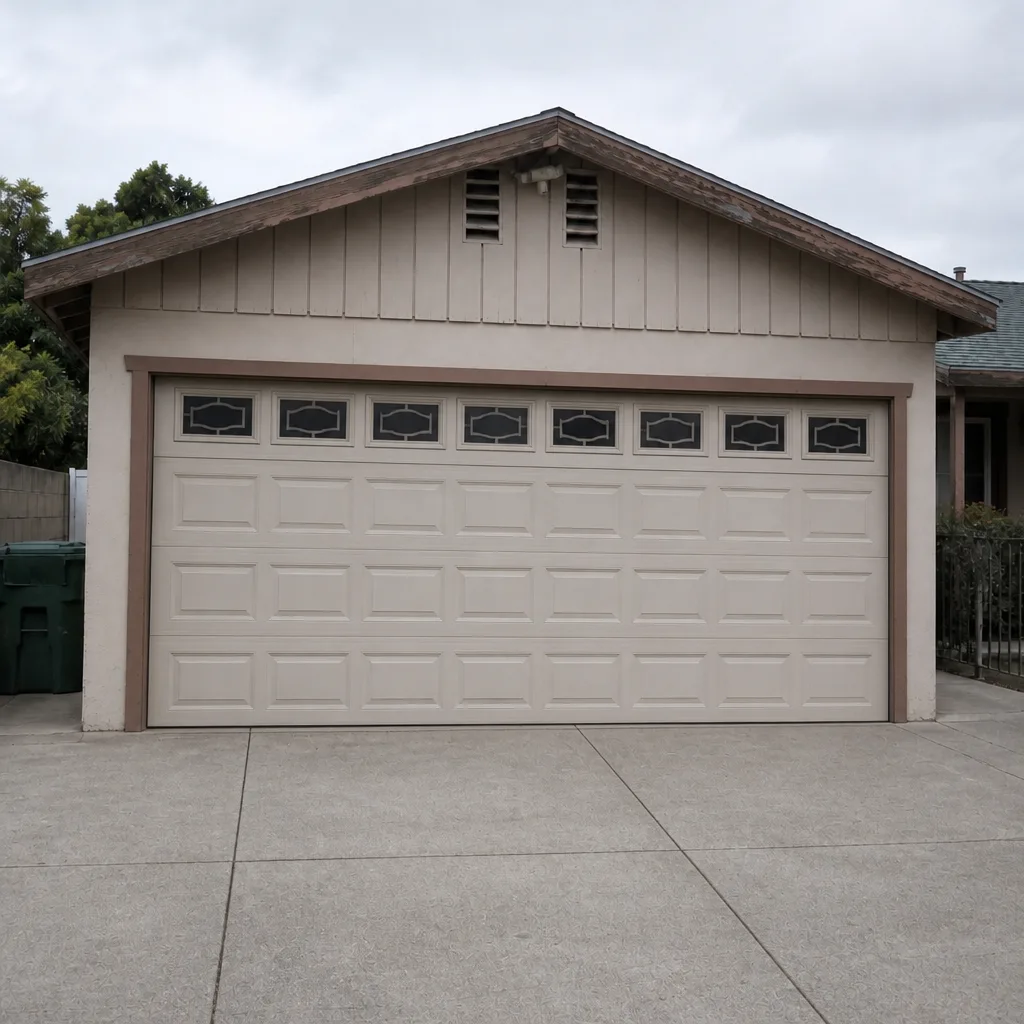 After
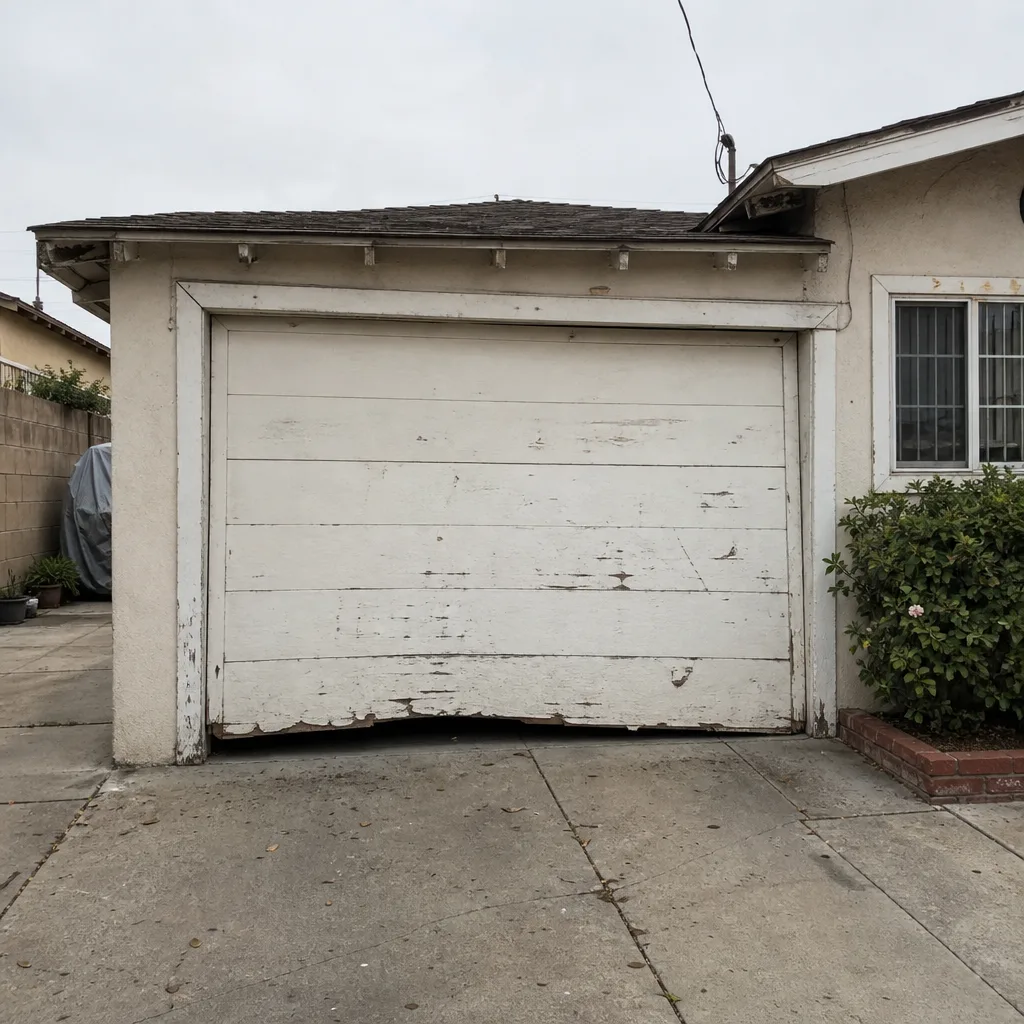 Before
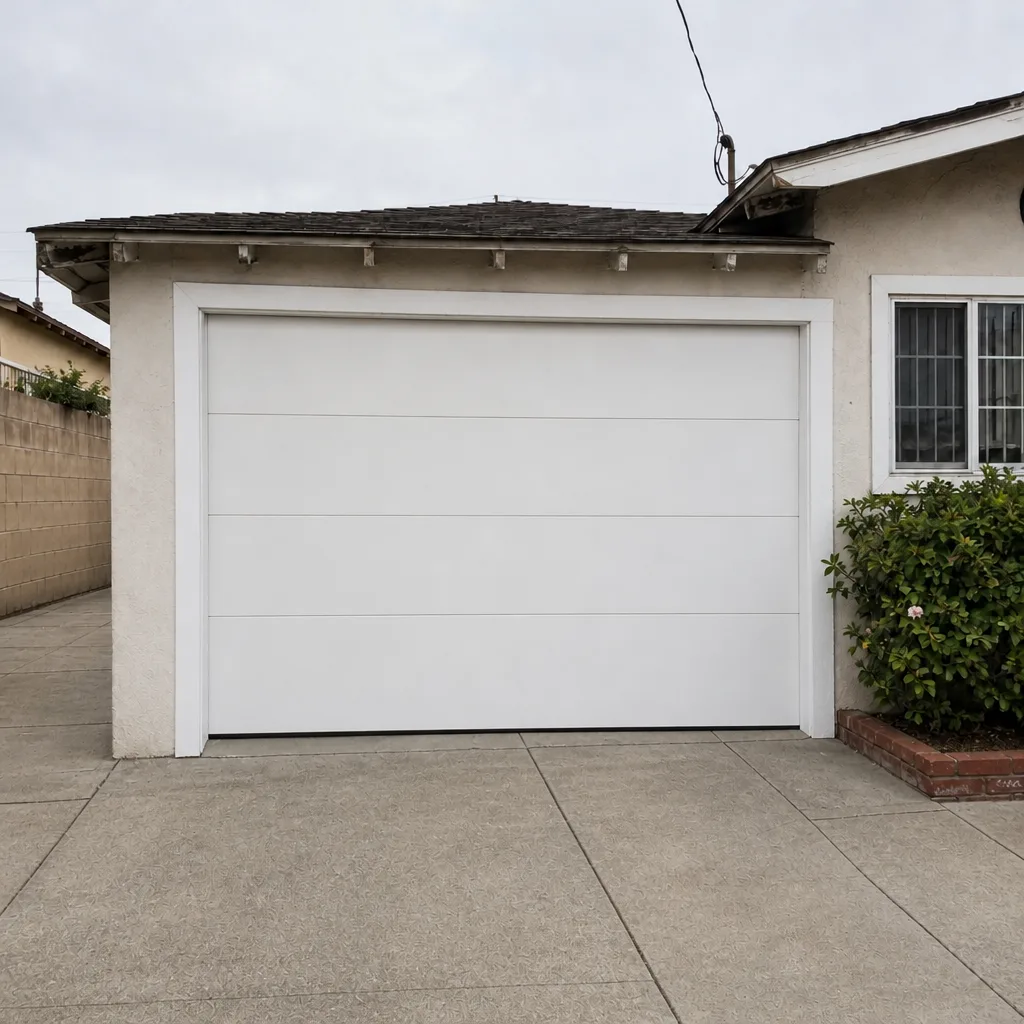 After
Frequently Asked Questions
Go to the Contractors State License Board website and enter the contractor’s name or license number. Look for a C-61/D28 classification and a status that says both “Active” and “Clear.” Any other classification does not legally cover garage door work.
A single spring replacement in Compton typically costs between $180 and $340, depending on the spring size and cycle rating. A matched pair is usually replaced together, doubling that range. The written estimate sets the final price before work begins.
Yes. We answer 24/7 and offer fast dispatch from 7am to 7pm, Sunday through Friday. Call (833) 593-3930 and we’ll book your repair into the next available opening.
A written estimate should list the door brand and model, the panel material and thickness, hardware by model number, labor separately, haul-away for the old door, and warranty terms for both parts and labor. Ask for all of it in writing.
Most cities in California require a permit for structural changes, and some require one for door replacements that alter framing or fire rating. Ask the Compton building department before the job starts. A licensed contractor will know what the city asks for and should handle the paperwork.
A lien waiver is a document from the contractor and any material suppliers that releases their right to place a mechanic’s lien on your property. Ask for one on any garage door job large enough to involve a deposit, and get the final waiver when you make the final payment.
The Bottom Line
Hiring a garage door contractor in Compton comes down to verification, documentation, and a few pointed questions. Check the C-61/D28 license on the CSLB website. Get a written estimate with model numbers and broken-out labor. Ask about spring sizing, opener compatibility, and warranty terms. Structure payment so the final dollar changes hands only when the door works correctly. A specialist who works on garage doors full time will pass every one of these tests without flinching. The person who hesitates, drops the price, or asks for cash is telling you everything you need to know. Get the right person on the job the first time. The alternative costs more than money; it costs your time, your safety, and eventually the full price of doing it twice.
Written by the team at garage door repair specialists Garage Door Service Compton, serving Compton since 2012. For garage door opener repair or a new installation, call (833) 593-3930. We answer 24/7. Fast dispatch from 7am to 7pm, Sunday through Friday.