
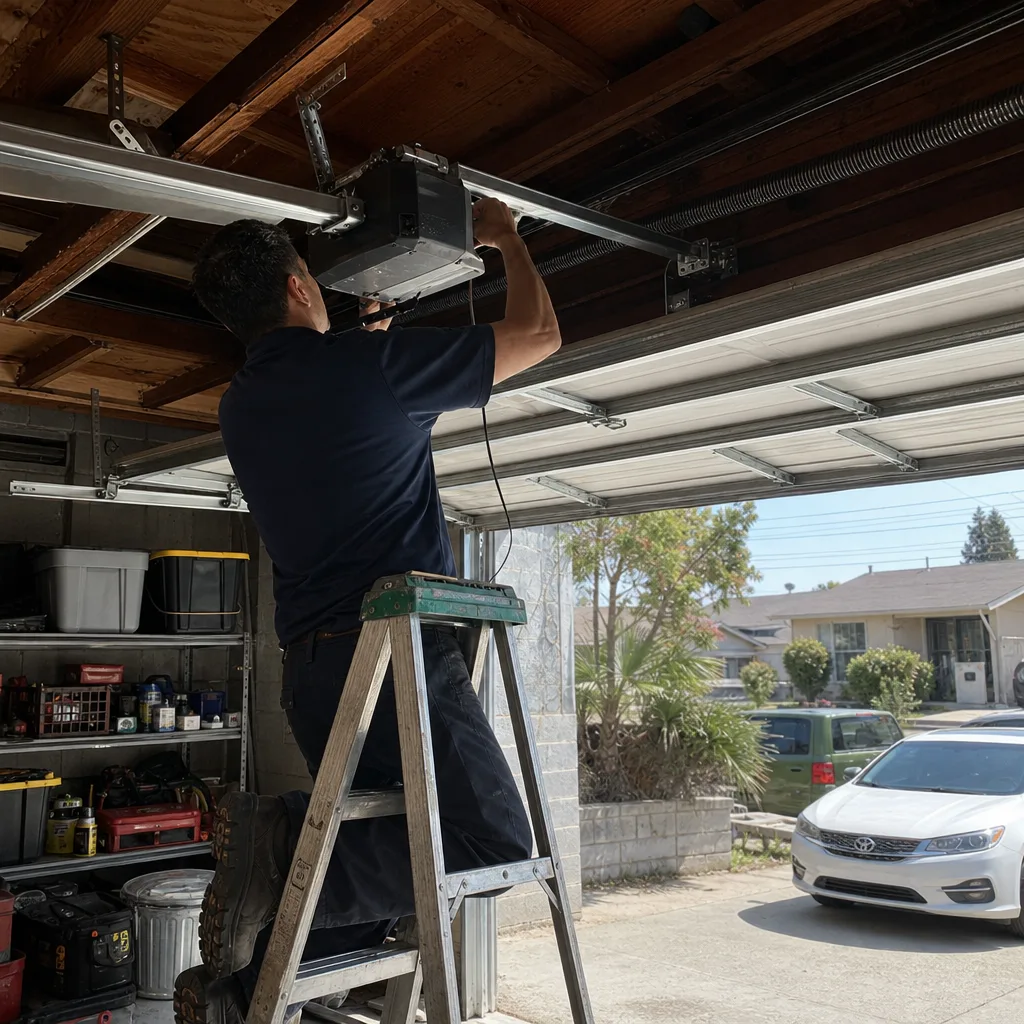
Last updated November 4, 2026
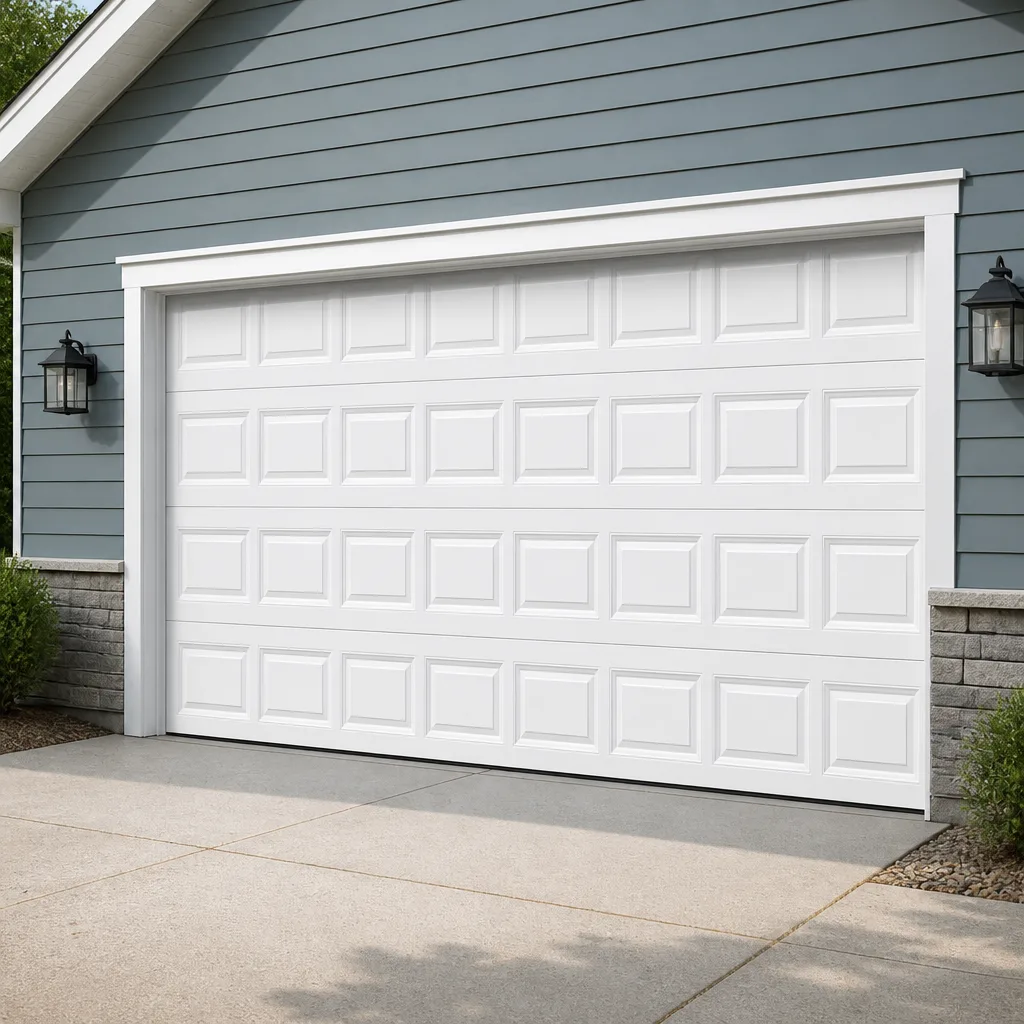 Raised-panel steel
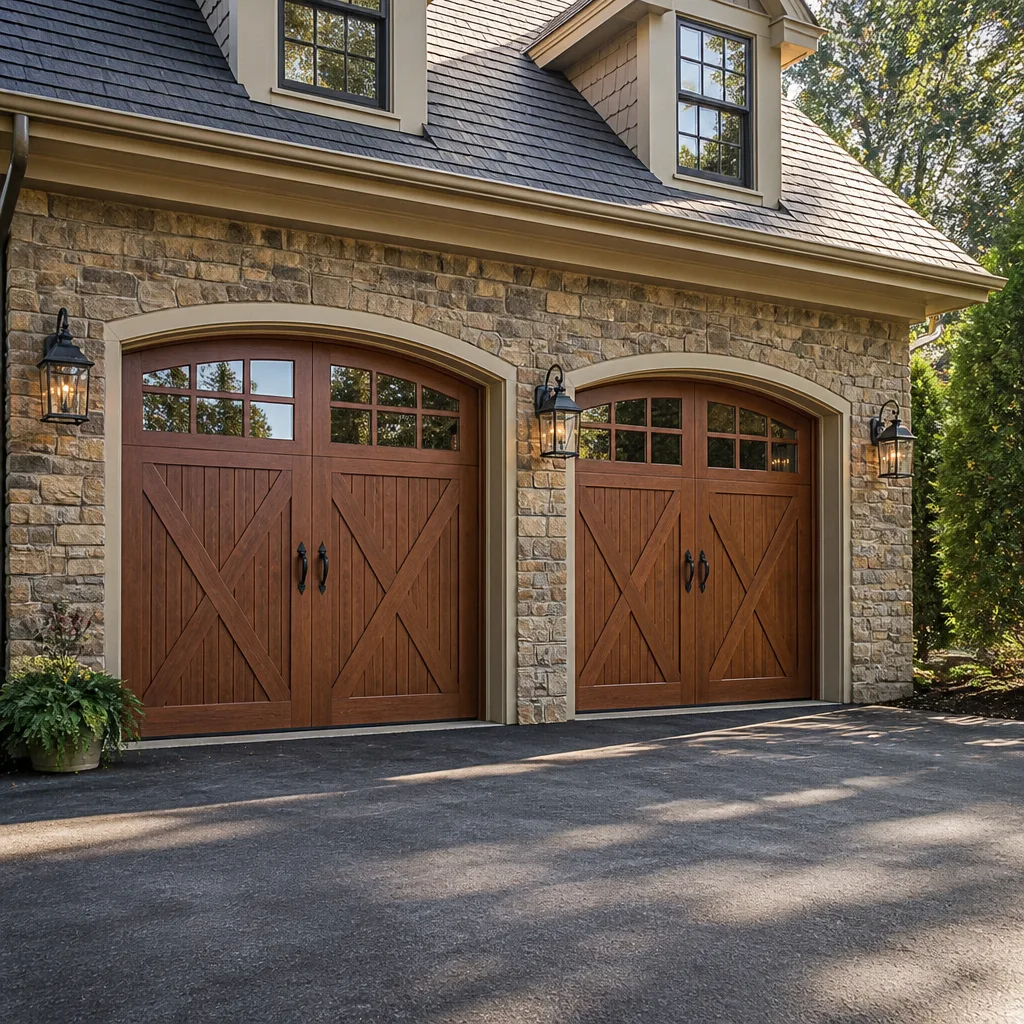 Carriage house
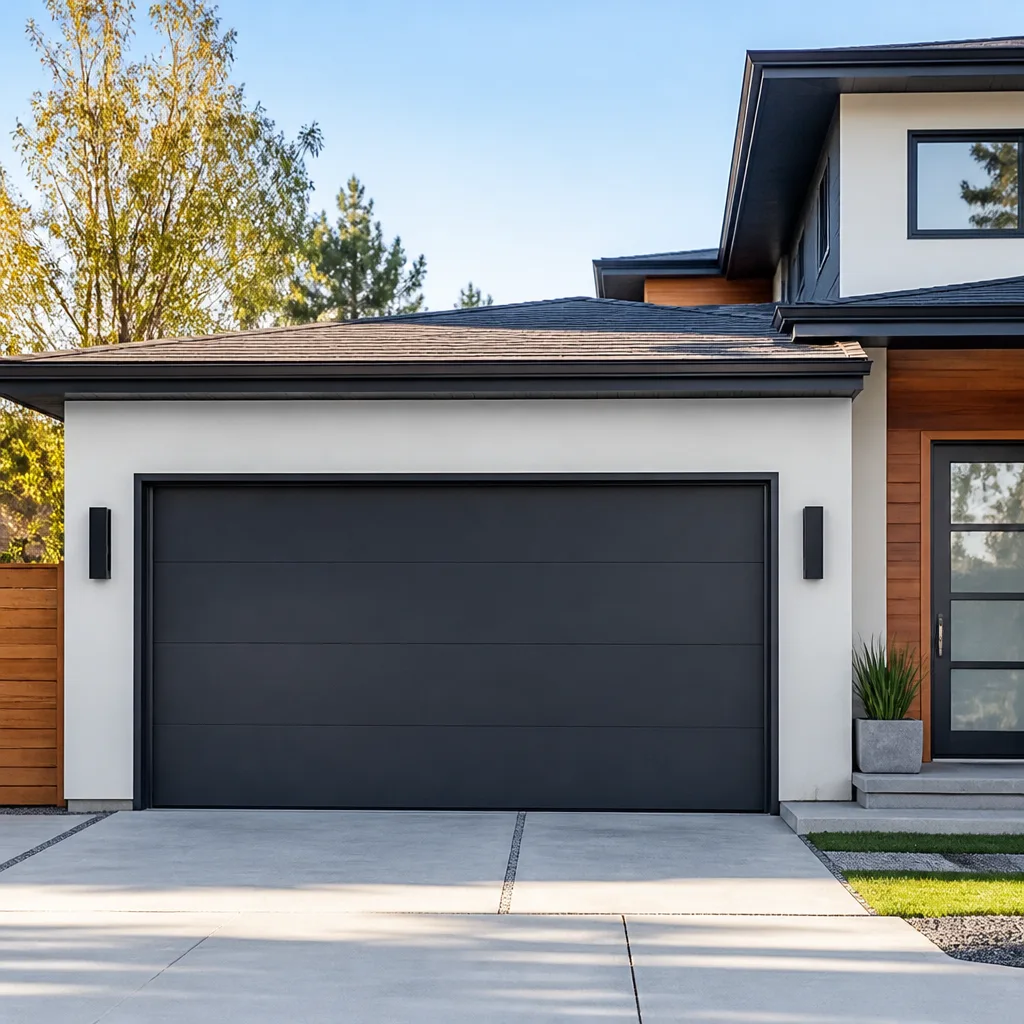 Modern flush
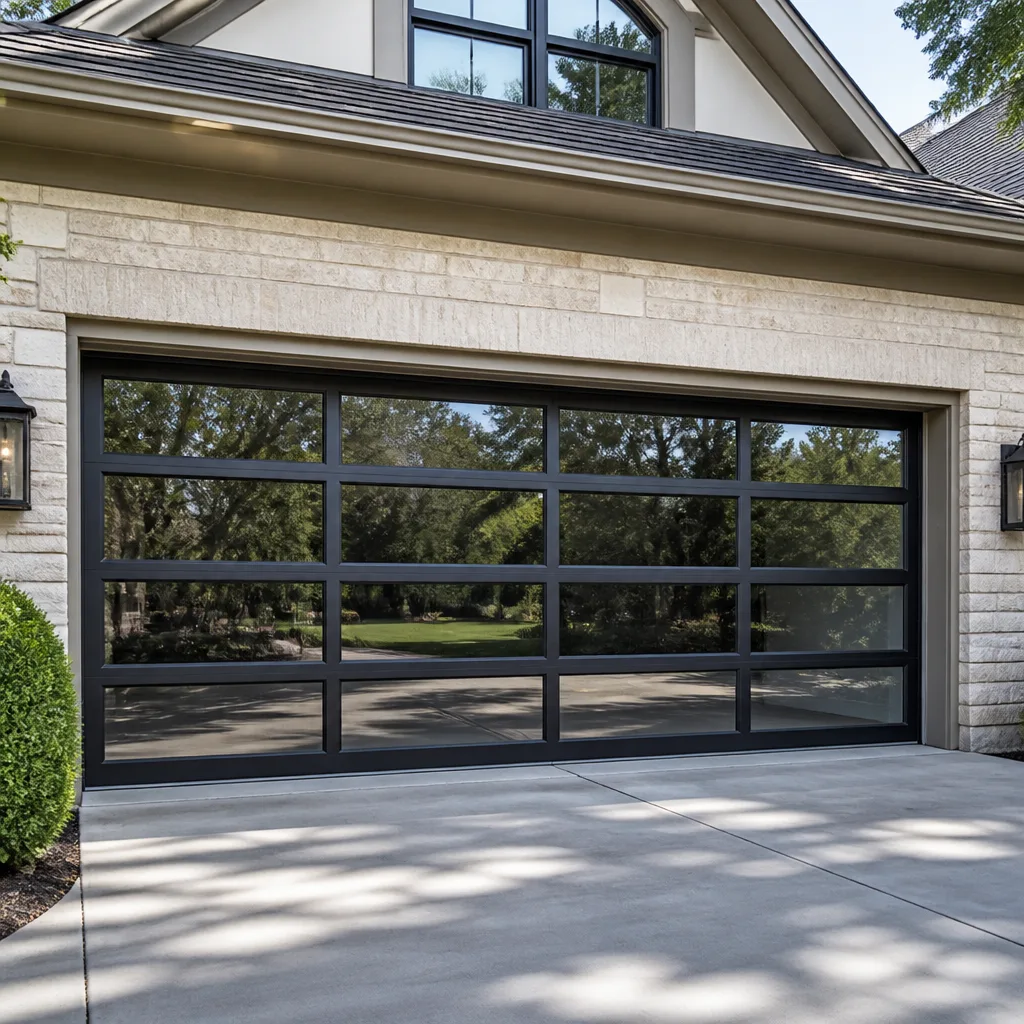 Full-view glass
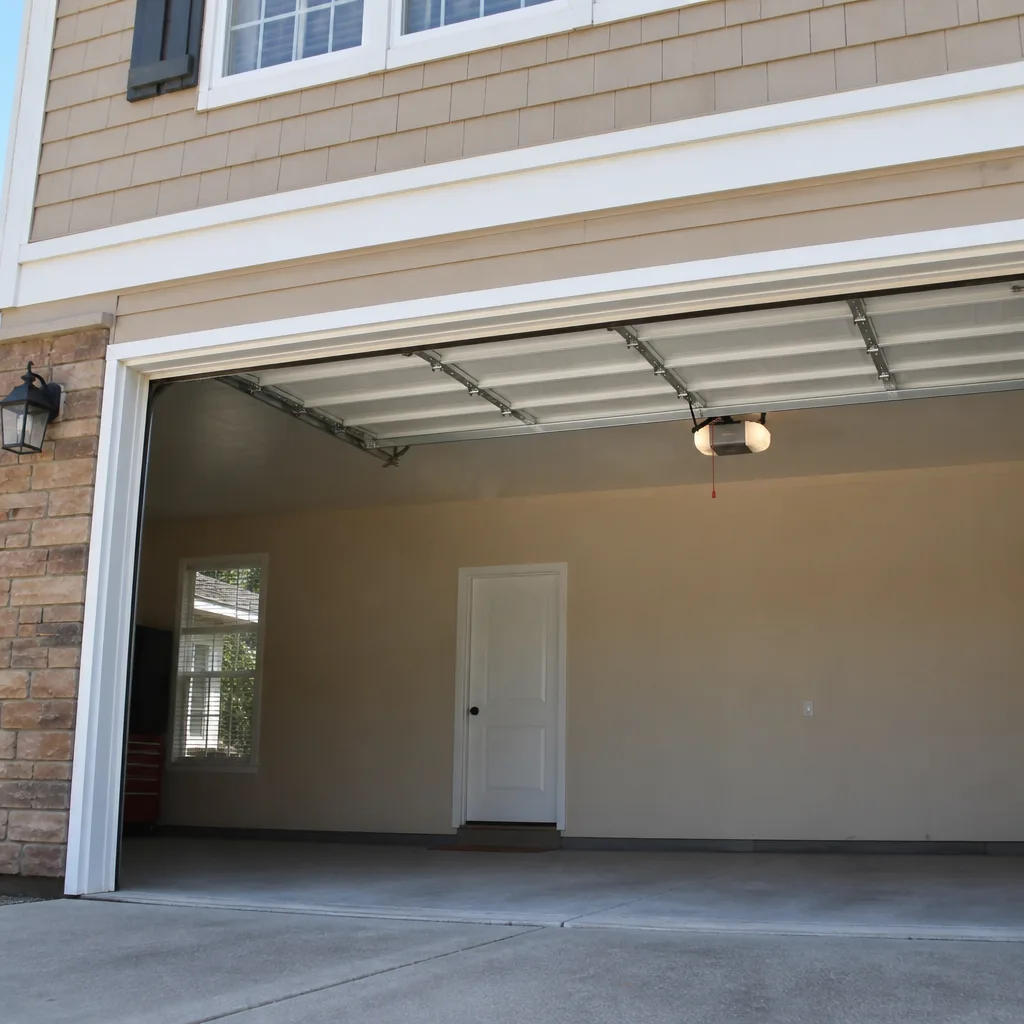 LiftMaster openers
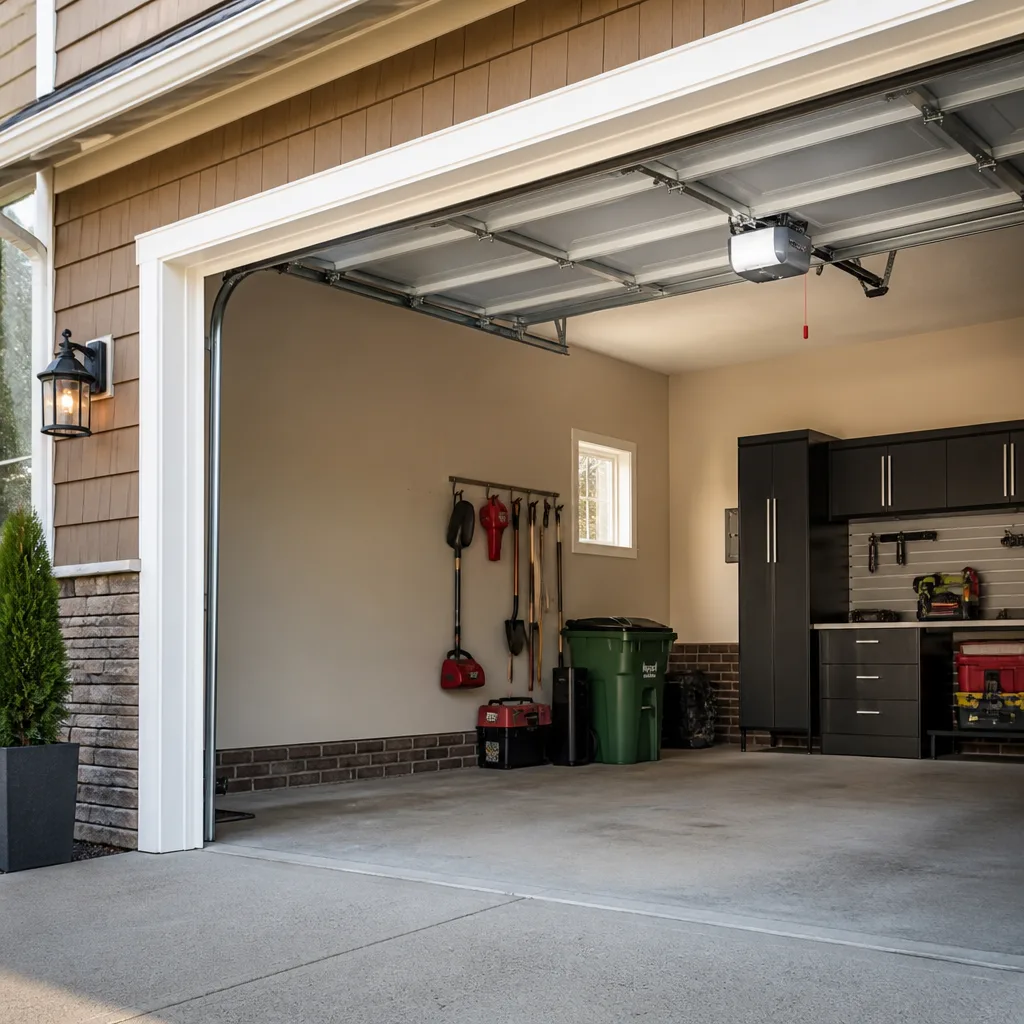 Chamberlain openers
Full 25-point door and opener safety check with every visit - springs, cables, rollers, tracks, and your LiftMaster or Chamberlain opener included
You get a price before we start. It does not change when the truck arrives.
Get your free estimateThe Complete Guide to Garage Doors in Compton
Most garage door guides assume your house came with a garage door that fits. Walk down any block in Compton and you’ll see why that assumption falls apart. Sixty years of additions, conversions, and improvised repairs mean a surprising number of openings don’t match any standard size a supply house keeps on the shelf. This guide explains what actually determines whether a door opens smoothly, stays secure, and holds up under daily use in Compton – and what to do when yours doesn’t. We’ll cover sizing, hardware choices, opener compatibility, and the modifications prior owners left behind that tend to surface at the worst possible moment.
Quick Answer
Choosing and maintaining a garage door in Compton comes down to three things: matching the door to the actual rough opening (which may not be standard size on older homes), selecting hardware and security features appropriate for a high-use urban environment, and working with a specialist who knows the brands installed across LA County. The right door for a 1950s Compton tract home is rarely the same door that works for a 2000s infill build, and a one-size-fits-all approach usually ends with a door that binds, sags, or fails early. Our team at Garage Door Service Compton works on these systems daily, and this guide shares what we’ve learned about them.
Styles & brands we work with
- Raised-panel steel
- Carriage house
- Modern flush
- Full-view glass
- LiftMaster openers
- Chamberlain openers
Table of Contents
- Why Compton’s Housing Stock Changes the Math
- Security Features That Actually Matter in LA County
- Brand Availability: What’s In Stock vs. What’s Ordered
- Replacement vs. Full System Upgrade
- Prior-Owner Modifications We See in Compton
- Opener Compatibility and Smart Home Integration
- A Practical Maintenance Schedule for Compton Homes
- Common Mistakes to Avoid
Why Compton’s Housing Stock Changes the Math
Compton’s residential core was built between 1940 and 1975, and that era dictates what you’ll find behind the trim. The original doors were typically 8 feet wide by 7 feet tall – a standard size, but a narrower one than the 9-foot and 10-foot widths common in newer subdivisions. The real complication isn’t the original size. It’s what happened to these garages over the following decades.
Many Compton garages spent years as storage rooms, workshops, or informal living space before being converted back for vehicle use. During those years, homeowners often altered the wall framing around the opening, changed the header height to fit a workbench or shelving, or framed in a portion of the opening to create a smaller door for a single small car. When the garage returns to vehicle duty, the opening no longer matches any off-the-shelf panel section.
What this means practically:
- Non-standard widths: An opening that’s been narrowed by a few inches won’t accept a standard door, and forcing one creates a track alignment problem that worsens over time.
- Header modifications: A header that’s been lowered or partially removed affects spring tension calculations and can void the door’s intended balance point.
- Track mounting surfaces: Framing that’s been patched repeatedly may not hold lag bolts as well as original lumber, which affects how securely the track mounts to the wall.
Before pricing a door, a technician has to measure the opening as it exists today, not what the builder installed. We find that roughly a third of Compton service calls involve an opening that has been modified at least once. The fix is sometimes straightforward – reframing a few inches of wall. Other times it requires a custom-width door with altered spring and track geometry. Either way, the opening determines the door, not the other way around.
Security Features That Actually Matter in LA County
Property crime rates in Los Angeles County are well documented, and garage doors are a frequent point of entry. But not every security feature marketed for garage doors earns its cost. Some are genuinely useful for Compton homeowners. Others are marketing language that won’t stop anyone with basic tools and ten minutes.
Features worth prioritizing:
- Solid-core steel construction at the insulated level: A door with a steel skin on both sides resists prying far better than a single-skin door. The interior skin matters as much as the exterior one.
- Rolling-code openers: Any opener made in the last fifteen years uses rolling codes, but older units are still in service around Compton. If your remote’s code never changes, it’s vulnerable to code grabbing. Replacement openers from LiftMaster and Chamberlain all use rolling codes.
- Manual slide latch with a padlock hasp: This is old technology and it works. A slide latch bolts the door to the track from inside, and a padlock through the hasp prevents the latch from being tripped through the gap at the top of the door.
- Reinforced striker plates on the side lock, if present: Many Compton garage doors have a rim lock mounted on the side. A standard striker plate pulls out of the jamb with one hard shove. A reinforced plate spreads the force.
Features that matter less than advertised:
- “Tamper-proof” bottom brackets: Most are standard brackets with a different name. The cables do more to secure the door than the bracket housing.
- Alarm systems bundled into smart openers: Useful for alerts, but the alarm itself doesn’t slow an intruder down. The door’s physical resistance matters more.
- Exterior keypads with basic PINs: Keypads are a convenience feature, not a security one. A four-digit PIN has 10,000 combinations and most people choose something obvious.
The security calculation in Compton is simple: make the door take enough time to force that an intruder chooses an easier target. A solid door with a manual latch and a rolling-code opener usually accomplishes that.
Brand Availability: What’s In Stock vs. What’s Ordered
Not every garage door brand has the same lead time in Compton. Local suppliers stock what sells quickly among the area’s contractors and homeowners, and everything else gets ordered from regional distribution centers. That difference matters when your door is down and you’re choosing between waiting for a specific brand or installing what’s available this week.
What we typically see in Compton inventory:
- Clopay and Amarr: These premium steel brands are stocked in common sizes at LA County supply houses. A standard 8×7 or 9×7 door in white or almond is usually available within a few days. Custom colors, wood-look finishes, or unusual sizes add two to four weeks.
- Wayne Dalton: Carried by several regional distributors, though selection in Compton tends toward mid-range models. TorqueMaster spring systems on some Wayne Dalton models require specific tools, which not every service truck carries.
- Craftsman: The consumer brand that’s everywhere in Compton’s older homes. Doors and parts are easy to source through standard retail channels, but the volume on Craftsman garage door systems is lower than it was a decade ago. Openers remain widely available.
- Raynor: A smaller footprint in the LA market than the big three. Raynor doors are solidly built, but Compton homeowners should expect a longer lead time for anything beyond a basic model.
The practical takeaway: if you need a door quickly, a standard-size Clopay or Amarr in a stock color is your fastest route. If you’re planning a replacement and want a specific brand or finish, order it before the old door fails completely. Waiting until a spring breaks and the door is stuck half-open limits what you can get quickly.
Replacement vs. Full System Upgrade
A “garage door replacement” and a “full system upgrade” are different jobs, and which one your Compton home needs depends on what’s already in place. Homeowners often assume any new door comes with new everything. It doesn’t. Here’s the distinction.
Replacement: The door panels and, typically, the spring assembly are replaced. The existing track, opener, and hardware remain, assuming they’re in serviceable condition and compatible with the new door’s weight. A replacement makes sense when the door is dented, rusted, or delaminating, but the track is straight and the opener is modern enough to handle the new door.
Full system upgrade: The door, track, springs, hinges, rollers, brackets, and usually the opener are all replaced. This job applies when multiple components have failed or when the current track configuration doesn’t suit the new door. On older Compton homes that have been modified, a full upgrade is often the only way to correct years of mismatched parts.
Follow these steps to figure out which job you need:
- Check the track for bends, rust-through, or loose mounting points. If the track shows structural issues, a panel-only replacement won’t fix the underlying problem.
- Confirm the opener’s age and compatibility. If the opener predates rolling-code technology or is undersized for the new door’s weight, it should be replaced along with the door.
- Have the spring balance tested. A door that won’t stay in position halfway up has a spring problem that a panel swap won’t address.
- Look for prior modifications. Non-code springs, welded brackets, or altered framing usually indicate deeper issues that a full upgrade addresses more cleanly than a piecemeal replacement.
If all four checks come back clean, a replacement is appropriate. If any one of them doesn’t, consider a system upgrade. The cost difference is real, but so is the difference in how the door operates afterward.
Prior-Owner Modifications We See in Compton
Garages in Compton have been adapted to more uses than almost any other room in the house. Band practice space, auto detail workshop, extra bedroom, commercial storage – all of those uses leave marks on the door and opening. On any given service call, we’re ready to find at least one thing the previous owner did that the current owner doesn’t know about.
Common modifications and what they mean for the door:
- Framing hacks: Narrowing an opening by screwing 2x4s to the existing jamb, usually to fit a smaller used door picked up cheap. The added lumber rarely matches the original framing’s structural connection, and the track ends up mounted to pieces that flex under load.
- Manual-lock welds: Prior owners sometimes weld the side lock shut or grind off the latch mechanism to keep the door locked permanently. When the opener later fails, the door can’t be opened manually, and the welded bracket makes repair more involved.
- Non-code springs: Extension springs that don’t have safety cables running through them, or torsion springs sized for a different door weight. Extension springs without safety cables can become projectiles if they snap.
- Opener mismatches: A cheap opener bolted to a heavy door it was never rated for. The opener works for a while, then the gears strip. The fix is a properly sized opener, not another cheap one.
- Improvised weatherstripping: Foam strips, carpet remnants, or caulk used to block the gap under the door. These trap moisture against the bottom panel and accelerate rust on steel doors.
The through-line with all of these is the same: someone solved an immediate problem with the cheapest available part and no thought to how the system would behave six months later. Correcting them starts with an honest assessment of what’s actually installed, which is standard practice on our first visit to any Compton home.
Opener Compatibility and Smart Home Integration
Garage door openers in Compton split into two camps: older units that predate smart-home integration entirely, and newer ones built to connect with the rest of the house. LiftMaster and Chamberlain dominate the latter group, and they’re the brands we work on most frequently when a Compton homeowner asks about smartphone control or integration with a home automation hub.
The compatibility question has three layers:
- Opener-to-door compatibility: An opener has a horsepower and drive-type rating. A belt-drive LiftMaster sized correctly for a double-wide steel door will struggle with a solid-wood custom door of the same width. The opener’s rating has to match the door’s actual weight, not its nominal size.
- Opener-to-smart-home compatibility: LiftMaster’s MyQ protocol and Chamberlain’s built-in connectivity cover most smart-home use cases in Compton. Third-party integrations vary. A homeowner using Apple HomeKit, Google Home, or Amazon Alexa should confirm the opener’s protocol before purchase, because not every smart opener talks to every hub natively.
- Opener-to-home-age compatibility: Older Compton homes sometimes have garage circuits that can’t handle two modern openers plus lighting without tripping. This isn’t an opener problem exactly, but it shows up as one – the opener works, then the breaker trips when the light and the motor run together.
A professional opener installation in Compton starts with the same step every time: measure the door’s weight and balance, then select the opener accordingly. Skipping that step and bolting on whatever’s on sale creates a unit that wears out prematurely and struggles with daily use. If your opener is a garage door opener repair situation rather than a full replacement, the diagnosis starts the same way.
A Practical Maintenance Schedule for Compton Homes
Garage door maintenance in Compton looks different than it does in colder climates. There’s no snow to scrape off, no frozen panels to thaw, and no expansion contraction from sub-freezing nights. What Compton doors deal with instead is dry-season dust, heat-related lubricant breakdown, and the constant cycle count of a door used multiple times per day on a busy household or home-based business.
A straightforward schedule that fits the climate:
- Every 3 months: Wipe the tracks clean with a dry rag. Spray the hinges, rollers, and bearing plates with a garage-door-specific lubricant – not WD-40, which is a cleaner and degreaser, not a long-term lubricant. High-heat summers in Compton dry out conventional grease faster than most homeowners expect.
- Every 6 months: Test the manual operation. Pull the release cord and open the door by hand. It should move smoothly and stay put at mid-height. If it falls or drifts, the spring tension is wrong, and that’s a safety issue that needs professional attention.
- Every 12 months: Inspect the weatherstripping along the bottom and sides. Compton’s dry season hardens rubber and vinyl, and once the material cracks, dust and small pests get in. Replacement stripping is inexpensive and prevents more expensive problems.
- Every 2 years: Have the spring cycle count and cable condition evaluated. Torsion springs are rated for a specific number of cycles, typically 10,000, and a door used six times a day reaches that number in under five years. Cables that show fraying should be replaced before they snap.
Most garage door failures in Compton aren’t sudden. They’re the end result of skipped maintenance on a door that’s cycled more often than the average. The fix is usually simple if caught early.
Common Mistakes to Avoid
- Buying a door based on price before measuring the opening. A door that’s the right price but the wrong size costs more in framing and track work than the savings. Measure first, then price.
- Replacing panels while keeping a mismatched spring. New panels weigh differently than old ones, and a spring sized for the original door won’t balance the new one. The result is an opener that strains and a door that slams.
- Choosing the cheapest opener for a heavy door. An undersized opener strips gears and burns out motors. Match the opener to the door’s weight, not to the sale price.
- Lubricating the track itself. Greasing the track collects Compton’s dry-season dust and creates a paste that binds the rollers. Lube the bearings and hinges, not the track surface.
- Ignoring frayed cables because “the door still opens.” Cables under tension don’t give much warning before they break. A frayed cable is a clear signal to replace it now, not after it fails.
- Assuming a prior owner’s modifications are safe. Non-code springs, welded locks, and improvised framing hold until they don’t. When in doubt, have a professional look at the system as a whole.
- Waiting until the door fails completely to schedule a replacement. A failing door limits your options for brands and finishes. Planning the replacement while the current door still functions gives you control over lead times and pricing.
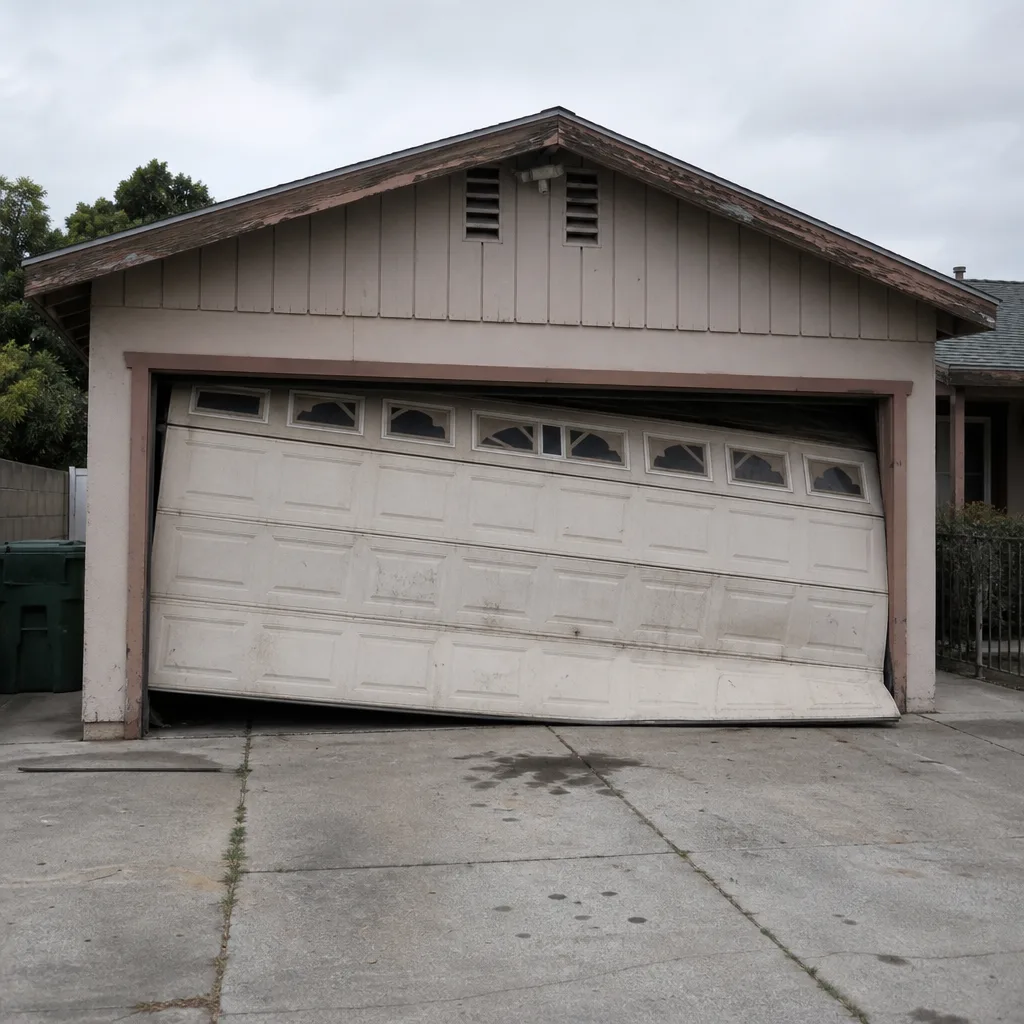
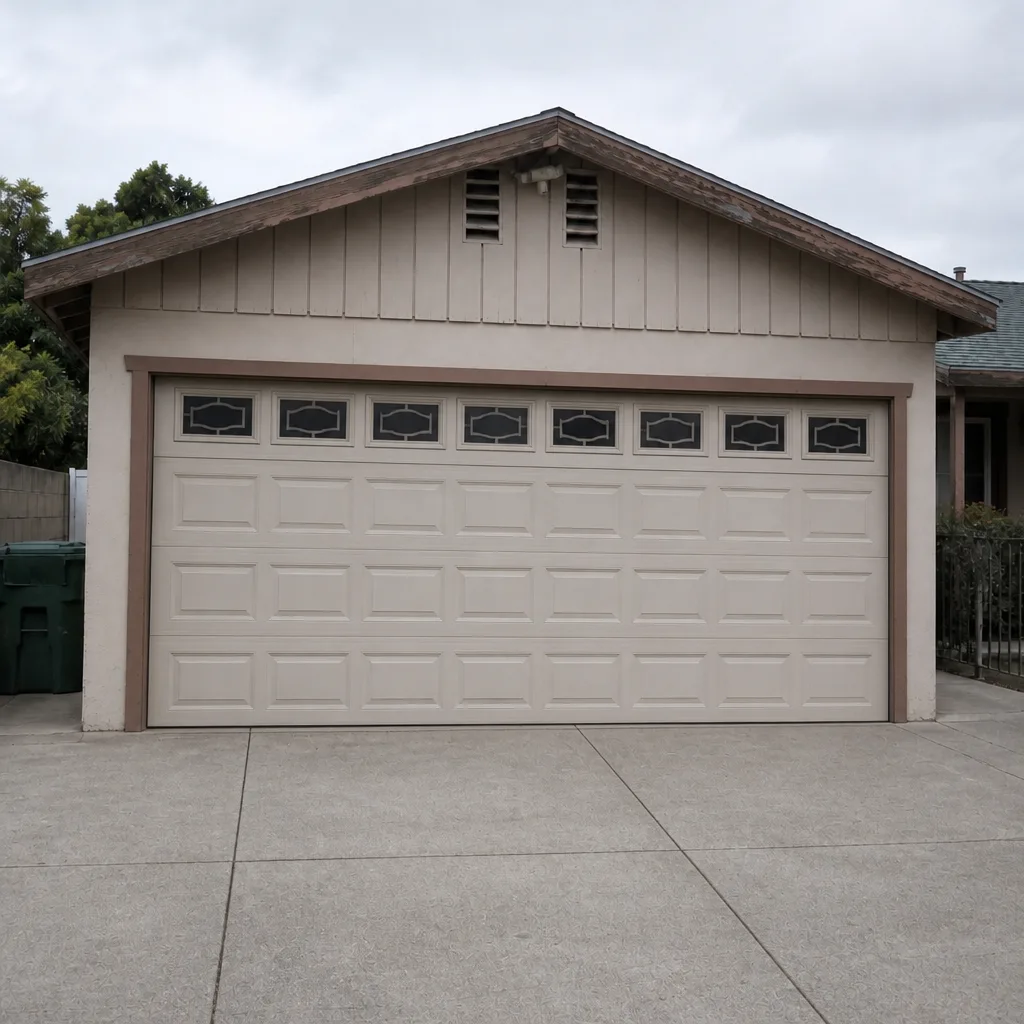
See the difference
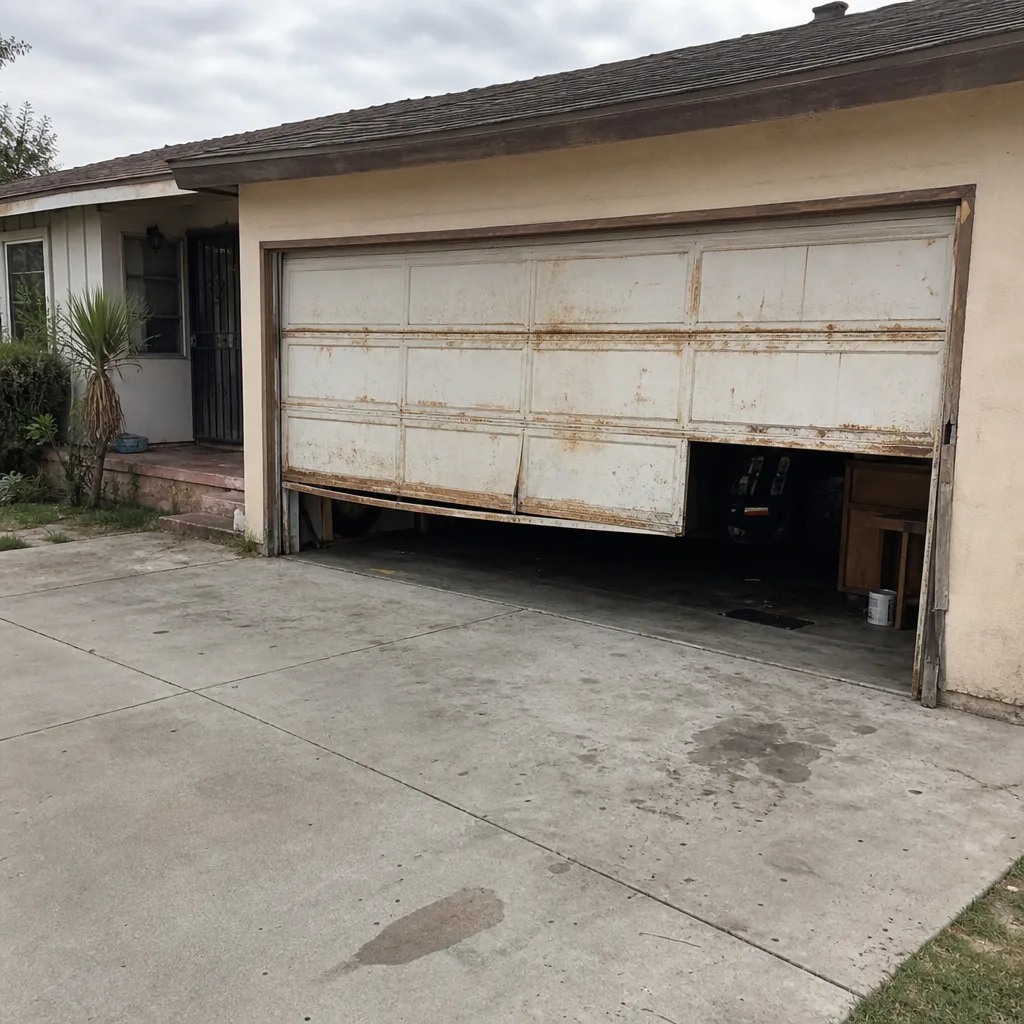 Before
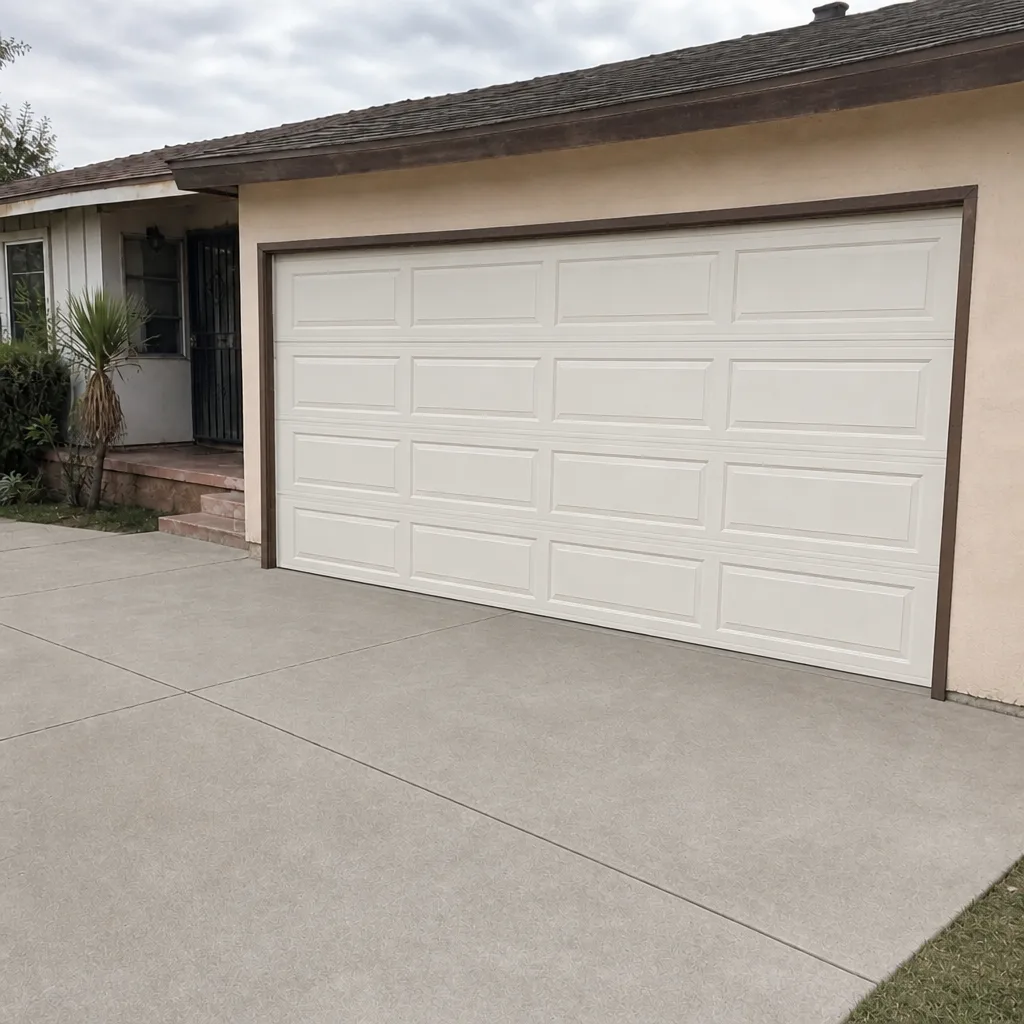 After
 Before
 After
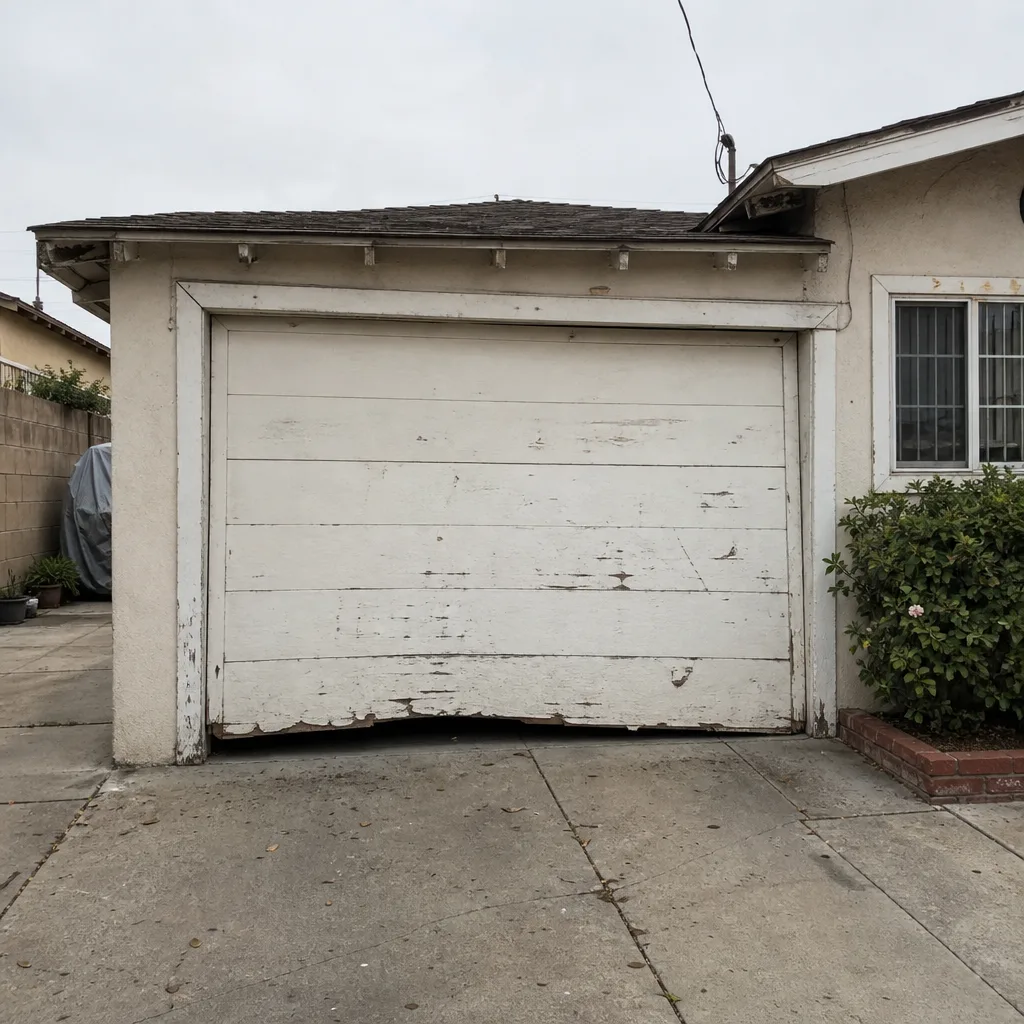 Before
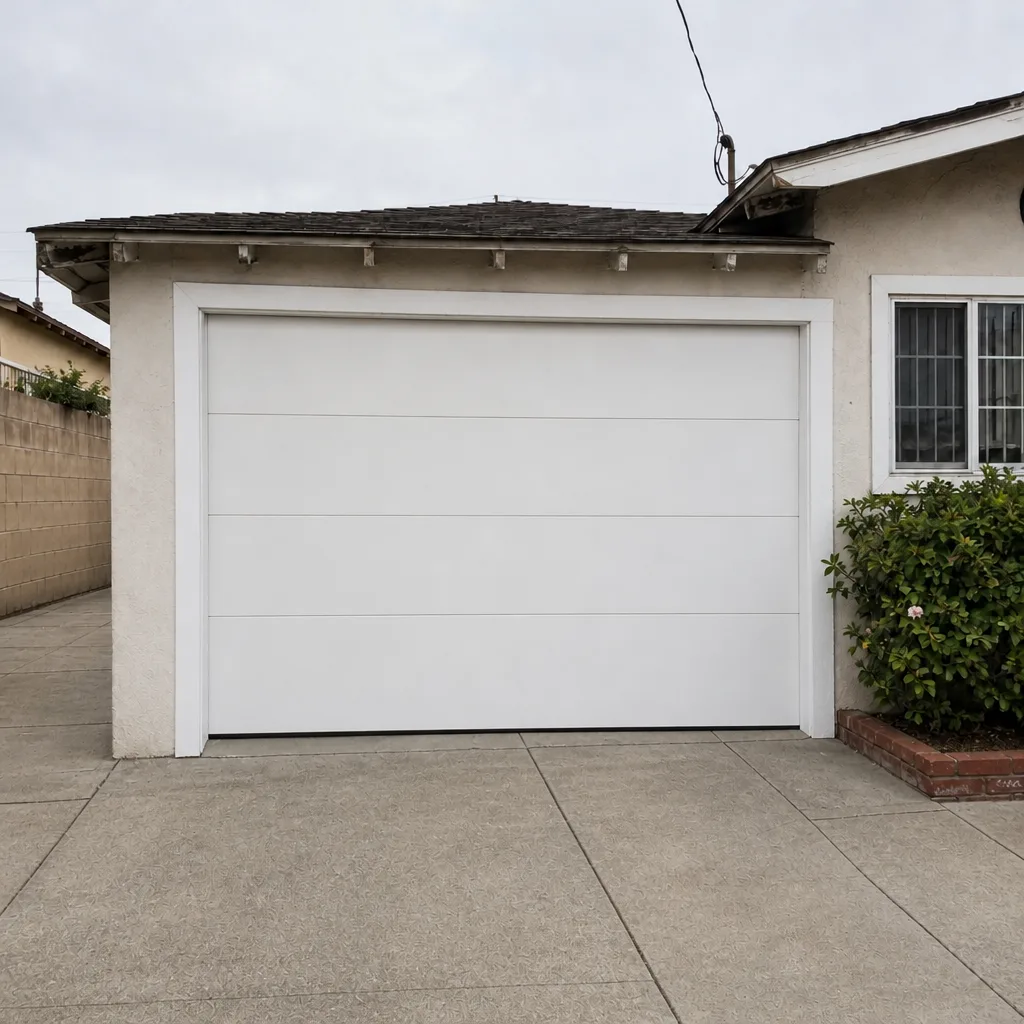 After
When to Call a Professional
Some garage door work is genuinely DIY-friendly: lubricating hinges, replacing weatherstripping, and tightening visible bolts are all within reach. Other work isn’t. Torsion springs are under enough tension to cause serious injury if mishandled, and the tools and technique for releasing that tension safely aren’t something you pick up from a video. The same caution applies to cable replacement, track realignment, and any opener electrical work.
If your door binds, slams, won’t stay balanced, or shows signs of prior-owner modifications you don’t fully understand, call a specialist. If the opener is dead and you can’t tell whether the problem is the motor, the logic board, or the door’s balance, same answer. garage door repair and Compton service work are what we do full-time. Garage Door Service Compton offers free estimates in Compton – call (833) 593-3930.
Frequently Asked Questions
A new single-car garage door in Compton typically runs from $800 to $1,800 installed, and a double door runs from $1,200 to $3,500, depending on material, insulation, and whether the opening is standard size. Custom widths or premium brands like Clopay and Amarr with wood-look or architectural finishes push the higher end. Every price is a written estimate, agreed before any work starts, and the estimate is free. Call (833) 593-3930 for an exact quote.
The original opening was likely standard when the house was built, but decades of conversions – storage rooms, workshops, living space – led prior owners to reframe the opening or install a smaller door. When the garage returns to vehicle use, the opening often no longer matches any off-the-shelf size, which is why a professional measurement is the essential first step.
Yes, with the right assessment first. The opener’s drive and horsepower must match the door’s actual weight, and the home’s existing garage circuit has to support the opener plus any lighting or accessories. LiftMaster and Chamberlain smart openers are the most common choices for Compton homeowners looking to add smartphone control, and we work on both daily.
Yes. A slide latch with a padlock hasp is inexpensive and gives you a second layer of security that an opener alone doesn’t provide. Openers can be bypassed, but a manual latch that bolts the door to the track from inside is a physical barrier that takes real time and noise to defeat.
Clopay and Amarr are the brands most often stocked in standard sizes at LA County suppliers, which means faster lead times. Wayne Dalton and Raynor are solid choices but often require ordering, adding two to four weeks. If you’re deciding based on speed and local availability, Clopay or Amarr in a stock color is the practical answer.
A standard replacement on an unmodified opening typically takes four to six hours for a single door. A full system upgrade on a modified opening, or a job that requires reframing work, can run a full day or more. The timeline is always confirmed in the written estimate before work starts. Call (833) 593-3930 for a free estimate – we answer 24/7 and dispatch fast from 7am to 7pm, Sunday through Friday.
The Bottom Line
The garage doors on Compton’s homes carry the traces of every use they’ve been put to over six or seven decades. That’s not something a generic guide accounts for, and it’s the reason a door that works perfectly on a suburban cul-de-sac in a new development behaves differently on a mid-century tract home that’s been modified three times. The solution starts with measuring what’s actually there, matching the hardware to the opening and the opener to the door’s real weight, and selecting security features that add physical resistance rather than marketing appeal. None of this is complicated once the baseline is established. Garage door work is all we do, which means we do it right. If you’re in Compton and need a door evaluated, repaired, or replaced, call (833) 593-3930 for a free estimate.
Written by the team at Garage Door Service Compton, serving Compton since 2012.